Farmers Who Refuse Modern Methods

javadiscovery.com — In the shadow of the slumbering volcanoes that rib the island of Java, the quiet defiance of farmers who refuse modern methods begins with a simple, ancient choice of seed. While the surrounding landscape is increasingly dominated by high-yield hybrids and chemical fertilizers, these “wong tani” (farmers) remain anchored to the “Pranata Mangsa,” the traditional Javanese agricultural calendar. To the modern eye, farmers who refuse modern methods might appear as relics of a bygone era, yet their decision is a deeply calculated act of “kearifan lokal” (local wisdom). They believe that the soil is not a mere factory floor, but a living “ibu” (mother) that must be nurtured through “ngrumat” (care) rather than coerced through chemicals. Farmers who refuse modern methods are the frontline guardians of Java’s biodiversity, preserving heirloom rice varieties like Rojo Lele and Pandhan Wangi that are slowly vanishing from the industrial market. For these stewards of the land, agriculture is not just a business; it is a spiritual contract with the “alam” (nature), a journey through time where the “aji” (value) of the harvest is measured by its harmony with the cosmic order.
The Philosophy of “Nrimo” and Soil Sanctity
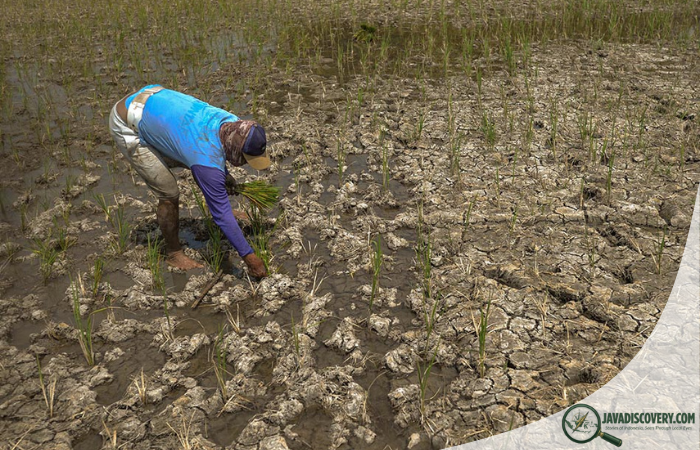
At the heart of the movement of farmers who refuse modern methods is the Javanese philosophy of Nrimo ing Pandum—accepting what is given with grace. While industrial farming seeks to maximize output at any cost, these traditionalists seek “cukup” (sufficiency). They argue that the aggressive use of pesticides and urea has “diluted” the soul of the Javanese earth, making the land “mendhem” (intoxicated) and dependent on external inputs. Farmers who refuse modern methods observe that the soil in their ancestral plots remains dark, porous, and teeming with life, unlike the hardened, cracked earth of neighboring industrial farms.
This refusal is also a spiritual stance. In villages near Wonosobo or the foot of Mount Merapi, farmers who refuse modern methods still perform the “Wiwiit” ritual before the harvest. They offer “sesaji” (offerings) to Dewi Sri, the Goddess of Rice, as a sign of gratitude. To them, using heavy machinery or harsh chemicals in a sacred space is “ora elok” (unseemly). They prefer the “cangkul” (hoe) and the “ani-ani” (small hand-held reaping knife), tools that require a physical connection to the plant. This slow, deliberate process ensures that the “spirit” of the rice remains intact, resulting in a grain that many locals claim tastes “luwih gurih” (more savory) and stays fresh longer than its “modern” counterparts.

The Calendar of the Stars: Pranata Mangsa
For farmers who refuse modern methods, the “Pranata Mangsa” is the ultimate authority, far surpassing the predictions of modern meteorological apps. This celestial system, passed down through generations of oral tradition, dictates exactly when to plant and when to fallow based on the position of the stars (notably the Pleiades or Lintang Kartika) and natural signs like the behavior of certain birds or the flowering of the kapok tree. Farmers who refuse modern methods argue that this system provides a more accurate “feeling” for the island’s micro-climates than any satellite data.
Following this ancient rhythm allows farmers who refuse modern methods to avoid the worst effects of pests and droughts. By planting in sync with the natural cycles, they minimize the need for intervention. This “wait-and-watch” approach is a form of deep ecological intelligence. In a world of climate uncertainty, these traditional techniques are proving remarkably resilient. Farmers who refuse modern methods are often the only ones whose crops survive a sudden “pancaroba” (transitional season) because their heirloom seeds have “memory”—a genetic adaptation to the specific volcanic soils and humidity of their local “dusun” (hamlet).
“The city people call us ‘kuno’ (ancient) because we don’t use tractors. But my soil is still healthy after fifty years, while my neighbor’s land is dead without his white powder. Who is the wise one?” — Pak Subandrio, 62, a traditional rice farmer in Central Java.
Economic Sovereignty and the Seed Bank
A major driver for farmers who refuse modern methods is the desire for “kemandirian” (independence). Modern industrial farming often traps the “wong tani” in a cycle of debt, as they must purchase expensive seeds and chemicals from multinational corporations every season. Farmers who refuse modern methods practice “save-your-own-seed.” After every harvest, the best ears of grain are dried and stored in a “lumbung” (granary) for the next year. This creates a closed-loop system that is immune to price fluctuations in the global market.
This self-reliance is a form of quiet “perlawanan” (resistance). By maintaining their own seed banks, farmers who refuse modern methods are preserving a genetic legacy that belongs to the Javanese people, not a corporate entity. In villages across East Java, these farmers are forming small collectives to share knowledge and seeds, creating a “grassroots” network of biodiversity. They are proving that “success” in the field is not just about the weight of the sack, but about the “kedaulatan” (sovereignty) of the farmer over their own destiny and their own land.
| Industrial Method (Modern) | Traditional Method (Refusal) |
|---|---|
| Hybrid/GMO Seeds (One-time use) | Heirloom Seeds (Saved & Shared) |
| Chemical Fertilizers & Pesticides | Compost, Manure, & Biological Control |
| Tractors & Heavy Machinery | Manual Labor / Buffalo-plowing |
| Goal: Maximum Profit/Yield | Goal: Harmony, Health, & Sufficiency |
The Buffalo and the “Luku”: A Disappearing Sight
One of the most evocative images of farmers who refuse modern methods is the use of the “kerbau” (water buffalo) and the “luku” (wooden plow). While the “hand-tractor” has become the standard across Java, a dedicated minority still prefers the buffalo. The reason is practical as well as philosophical: the heavy tractor compacts the soil, while the buffalo’s hooves actually help aerate the mud. Furthermore, the buffalo provides “pupuk kandhang” (natural manure), completing the ecological circle.
The relationship between the farmer and the buffalo is one of “paseduluran” (brotherhood). Farmers who refuse modern methods talk to their animals, treating them with a respect that no machine could command. This bond reflects the Javanese ideal of living in “manunggaling” (oneness) with all creatures. When you see a buffalo moving slowly through the flooded “sawah” at dawn, you are seeing a technology that has worked for a thousand years without depleting the earth’s resources. It is a slow, rhythmic dance that requires patience—a virtue that is rapidly disappearing in the age of “instant” results.
Challenges: Pressure from the New World
The path of farmers who refuse modern methods is fraught with “ganjalan” (obstacles). Government programs often push “modernization” as the only path to development, sometimes making it difficult for traditional farmers to access water rights or credit if they don’t use “approved” methods. There is also the pressure of the younger generation, many of whom see traditional farming as “rekoso” (too difficult) and “mubazir” (wasteful) in terms of time. The lure of the city and the factory floor is a constant threat to the survival of these ancient techniques.
However, a counter-movement is emerging. Urban consumers in Jakarta and Yogyakarta are increasingly seeking out “beras sehat” (healthy rice) grown by farmers who refuse modern methods. This “back-to-nature” trend among the middle class is creating a niche market that values quality and ethics over price. This economic bridge is providing a new lifeline for traditionalists, allowing them to maintain their lifestyle while earning a dignified “penghasilan” (income). Farmers who refuse modern methods are finding that their “kuno” ways are suddenly “modern” in the eyes of a world looking for health and sustainability.
Conclusion: The Guardians of the Javanese Soul
Farmers who refuse modern methods are not merely resisting technology; they are defending a civilization. In their refusal, they are protecting the “rasa” (essence) of the Javanese landscape. They remind us that the “kemajuan” (progress) of a society is not just measured by how fast it moves, but by what it leaves behind. By choosing the old ways, they ensure that the “warisan” (heritage) of the Javanese soil remains fertile for the generations to come.
As the “adzan” calls out across the valley and the sun dips behind the volcano, a farmer somewhere in Java is cleaning his “ani-ani” and patting the flank of his buffalo. He is tired, but he is “tentrem” (at peace). He knows that his harvest was grown in the right way, at the right time, with the right spirit. Farmers who refuse modern methods are the ultimate “saksi” (witnesses) to the eternal truth of the island: that if you take care of the land, the land will take care of you. In the heart of Java, the future is being sown with seeds from the past, and the harvest is a journey of faith and humanity that never ends.