The Role of Termites in Javanese Soil Health and Farming


javadiscovery.com – In the quiet layers beneath Javanese soil, far below the roots of rice and cassava, an unseen world is constantly at work. Small, pale insects move through narrow tunnels, carrying fragments of decaying leaves, bits of wood, and particles of earth. Their movement is slow but relentless, their presence rarely noticed unless their mounds rise above the ground like small earthen towers. These are termites, often regarded only as pests, yet in the agricultural landscapes of Java, they play a far more complex and essential role.
To farmers who observe their land closely, termites are not simply destroyers. They are part of a hidden system that sustains soil health, improves fertility, and supports the long-term productivity of fields. Their activity shapes the structure of the ground itself, influencing how water moves, how nutrients are distributed, and how plants grow.
Understanding termites in this context requires looking beyond their reputation and into the ecological processes they quietly maintain.

Termites as Decomposers
One of the primary ecological roles of termites is decomposition. In rural Java, organic material accumulates continuously. Fallen leaves, crop residues, and dead wood cover the soil surface.
Termites consume this material, breaking it down into smaller particles. Through digestion, they convert complex organic matter into simpler compounds that can be absorbed by plants.
This process accelerates nutrient cycling, returning essential elements such as carbon, nitrogen, and phosphorus to the soil.
Without such decomposition, organic material would accumulate slowly, and nutrients would remain locked within it.
Soil Structure and Aeration
As termites move through the soil, they create extensive tunnel systems. These tunnels serve multiple ecological functions.
First, they improve soil aeration. By creating spaces within the ground, termites allow air to circulate, supporting the activity of microorganisms and root systems.
Second, they enhance soil porosity, making it easier for water to infiltrate. This reduces surface runoff and helps maintain moisture levels within the soil.
The combined effect is a more stable and resilient soil structure, capable of supporting plant growth under varying conditions.
Natural Soil Engineers
Termites are often described as ecosystem engineers because of their ability to modify their environment.
Through their feeding and building activities, they mix soil layers, bringing deeper materials closer to the surface and integrating organic matter throughout the profile.
This mixing process improves soil texture and distribution of nutrients.
In areas where termite activity is high, soils tend to be more friable, meaning they are easier to work and better suited for cultivation.
Termite Mounds as Fertility Hotspots
In some parts of Java, termite mounds rise above the ground as visible markers of their activity. These structures are built from soil particles, saliva, and organic matter.
Over time, the material within these mounds becomes rich in nutrients.
Farmers may recognize that plants growing near termite mounds often appear healthier or more vigorous. This is due to the concentration of nutrients and improved soil conditions in these areas.
In certain cases, soil from termite mounds is even used to enrich planting sites.
Water Retention and Drought Resistance
The tunnels created by termites also influence how water is stored in the soil.
By increasing infiltration, they allow rainwater to penetrate deeper into the ground, reducing evaporation from the surface.
This helps maintain moisture during dry periods, supporting crops when rainfall is limited.
In regions of Java where seasonal variation affects water availability, this function becomes particularly important.
A Delicate Balance with Agriculture
While termites provide ecological benefits, their relationship with agriculture is not always straightforward.
In certain conditions, termites may feed on living plants, especially when natural food sources are scarce. This can lead to damage in crops such as maize or young trees.
Farmers must therefore balance the benefits of termite activity with the need to protect crops.
Traditional practices often reflect this balance. Rather than eliminating termites entirely, farmers may manage their presence through land use and crop selection.
Traditional Knowledge and Observation
In many rural communities, knowledge about termites is based on long-term observation.
Farmers recognize patterns in termite behavior, understanding when their activity is beneficial and when it may become problematic.
For example, increased termite presence may indicate dry conditions or changes in soil composition.
These observations contribute to a broader understanding of environmental conditions, linking insect activity to agricultural decision making.
Termites and Biodiversity
Termites also support broader ecological systems by interacting with other organisms.
Their tunnels provide pathways for microorganisms and small invertebrates. Their mounds create habitats for plants and animals adapted to specific conditions.
In this way, termite activity contributes to biodiversity at multiple levels.
Their presence influences not only soil health but also the distribution of life within the ecosystem.
Modern Challenges and Changing Landscapes
Changes in land use, including intensive agriculture and urban expansion, can disrupt termite populations.
The use of chemical pesticides may reduce termite activity, but it can also affect other beneficial organisms and alter soil processes.
Loss of natural vegetation reduces the availability of organic material, limiting the resources termites depend on.
These changes can weaken the ecological functions that termites provide, leading to less resilient soils.
Scientific Perspectives on Termite Ecology
Scientific studies have increasingly recognized the importance of termites in maintaining soil health, particularly in tropical regions.
Research shows that termite activity can significantly improve soil structure, increase nutrient availability, and enhance plant growth.
These findings align with traditional observations in Java, where farmers have long understood the value of these insects through practical experience.
A Hidden Workforce Beneath the Fields
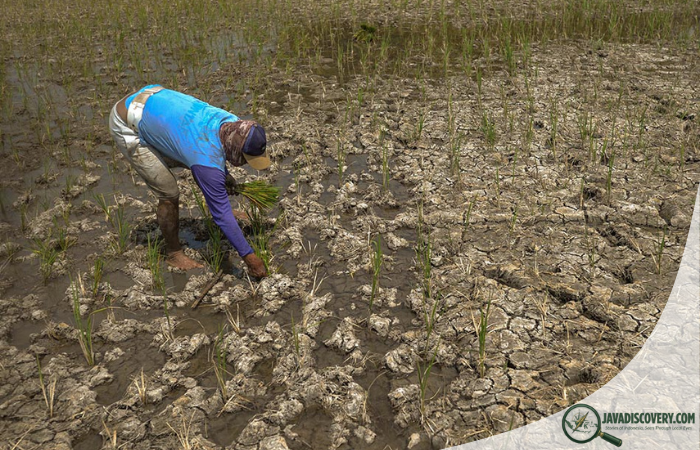
Standing in a rice field or vegetable plot, it is easy to overlook the processes taking place beneath the surface. The soil appears still, its changes gradual and unseen.
Yet within it, termites continue their work, breaking down material, shaping structure, and sustaining the conditions necessary for life.
Their presence reminds us that ecosystems are built not only by visible elements, but by countless small interactions occurring out of sight.
Rethinking the Role of Termites
In Java’s rural landscapes, termites challenge simple classifications. They are neither purely beneficial nor entirely harmful.
Instead, they represent a dynamic force within the ecosystem, one that requires understanding rather than elimination.
By recognizing their role in soil health, communities can approach land management in ways that support both productivity and ecological balance.
In the end, termites are part of a larger story about how life in Java is sustained. A story written not only in fields and forests, but in the intricate networks beneath the ground.