Hidden Springs and Sacred Water Sources in Javanese Villages

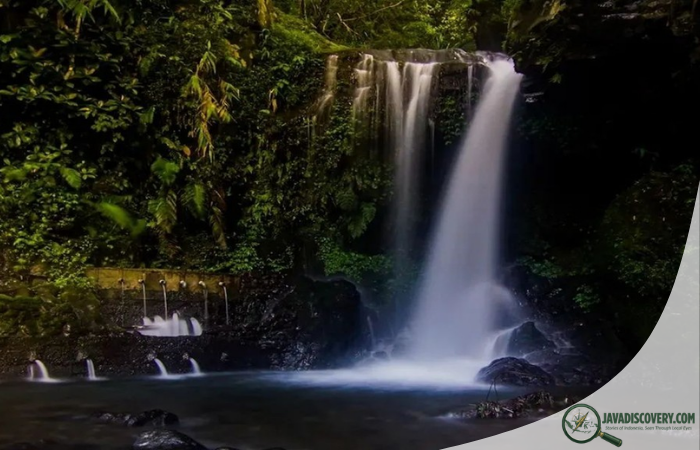
javadiscovery.com – Tucked behind bamboo groves, beneath ancient banyan trees, or hidden along the edges of rice fields, water emerges quietly from the earth in many Javanese villages. It does not rush or roar. It seeps, gathers, and flows with a steady patience that feels almost deliberate. These are the hidden springs, places where water surfaces without spectacle yet carries deep meaning for those who live nearby.
To an outsider, a spring may appear as a simple natural feature. Clear water pooling in a shallow basin, feeding irrigation channels or filling small stone enclosures. But within village life, these sources are more than practical. They are sites of memory, belief, and continuity, where ecology and spirituality meet in ways that shape how communities understand their environment.
In Java, water is not only a resource. It is a presence that connects land, people, and unseen forces.

The Geography of Hidden Springs
Springs in Java often emerge in areas where underground water finds pathways to the surface. This can occur along slopes, near riverbanks, or at the base of volcanic terrain.
The island’s geological structure, shaped by volcanic activity and layered soils, creates natural reservoirs where water is stored and slowly released.
In many villages, springs are located at transitional spaces. The boundary between forest and field, between higher ground and lowland terraces.
These locations are not always marked by obvious signs. Knowledge of their existence is often passed through generations, embedded in local memory rather than maps.
Water as Daily Life
For rural communities, springs serve essential practical functions. They provide water for drinking, cooking, bathing, and irrigation.
In places where modern infrastructure is limited, these sources remain central to daily routines.
At certain times of day, villagers gather at springs. Early morning light reflects off the water as people fill containers or wash quietly. Conversations take place in low voices, accompanied by the steady sound of flowing water.
This repeated interaction creates a rhythm, where the act of collecting water becomes part of social life.
Sacred Dimensions of Water
Beyond their practical use, many springs in Java are considered sacred. This perception is rooted in long-standing beliefs about the relationship between natural elements and spiritual forces.
Water emerging from the ground is often seen as pure, carrying a quality that connects it to deeper layers of existence.
Some springs are associated with ancestral figures or local guardians. Others are linked to historical events or myths that explain their origin.
In these contexts, the spring becomes a site of respect and ritual.
Ritual Practices
At certain times, offerings may be placed near the spring. Flowers, incense, or small items arranged carefully at the water’s edge.
These acts are not always formal ceremonies. They may be simple gestures, performed quietly and without audience.
People may also visit springs for personal reflection, seeking calm or clarity in the presence of flowing water.
The Role of Trees and Landscape
Sacred springs are often accompanied by specific landscape features. Large trees, particularly banyan or other long-lived species, frequently stand nearby.
These trees provide shade and contribute to the atmosphere of the المكان, creating a sense of enclosure and stillness.
The surrounding vegetation also plays an ecological role, helping to protect the water source by stabilizing soil and maintaining moisture.
In many cases, the preservation of these natural features is influenced by their perceived sacredness. Areas around springs may be left undisturbed, allowing ecosystems to remain intact.
Water Management and Community Responsibility
Managing a spring requires collective responsibility. Communities often establish informal rules about how water is used and maintained.
Activities that could contaminate the source are avoided. Cleaning practices are regulated, and access may be organized to ensure fair distribution.
These systems reflect an understanding that water is shared, not owned. Its availability depends on careful stewardship.
In this way, practical management and cultural values reinforce one another.
Hidden Springs as Ecological Indicators
The presence and condition of springs can indicate the health of local ecosystems.
When vegetation is preserved and soil remains stable, water flow tends to be consistent. When land use changes, such as deforestation or construction, springs may weaken or disappear.
For villagers, these changes are observed over time. A reduction in flow or a shift in water clarity can signal broader environmental issues.
This awareness connects daily experience with ecological understanding.
Stories Carried by Water
Each spring often has its own story. These narratives are shared through conversation, passed from elders to younger generations.
Some stories speak of origins, explaining how the spring first appeared. Others recount events that took place nearby, linking the site to moments in local history.
These stories give the spring a sense of identity, transforming it from a physical location into a place with meaning.
Through storytelling, water becomes part of cultural memory.
Changing Conditions and Modern Pressures
As villages change, the role of springs can also shift. Access to piped water or wells may reduce reliance on traditional sources.
At the same time, environmental pressures such as land conversion and pollution can threaten the sustainability of springs.
Balancing development with preservation becomes an ongoing challenge.
In some areas, efforts are made to protect springs by maintaining surrounding vegetation and reinforcing traditional practices.
A Quiet Continuity
Despite these changes, many springs continue to flow as they have for generations. Their presence offers a sense of continuity in landscapes that are otherwise evolving.
They remind communities of connections that extend beyond immediate needs. Connections to land, to history, and to ways of understanding the world that emphasize balance and respect.
Where Water Emerges
Standing beside a hidden spring, it is possible to feel the subtle interplay between movement and stillness. Water rises from below, gathers briefly, and moves onward. It does not announce itself loudly, yet its impact is constant.
In Javanese villages, these sources remain part of daily life and deeper reflection. They sustain bodies, shape routines, and carry meanings that are not always spoken but widely understood.
In their quiet persistence, hidden springs reveal a relationship between humans and nature that is both practical and profound. A relationship where water is not only used, but recognized as something to be approached with care.