The Crater Lakes of Mount Papandayan

javadiscovery.com – Rising majestically above Garut in West Java, Mount Papandayan is one of Indonesia’s most fascinating active volcanoes — not just for its fiery heart, but for the tranquil lakes that shimmer within its craters. These crater lakes of Mount Papandayan are more than geological wonders; they are living stories of creation, destruction, and renewal, where molten earth and mist meet in a landscape both eerie and beautiful.
A Volcanic Landscape in Constant Motion
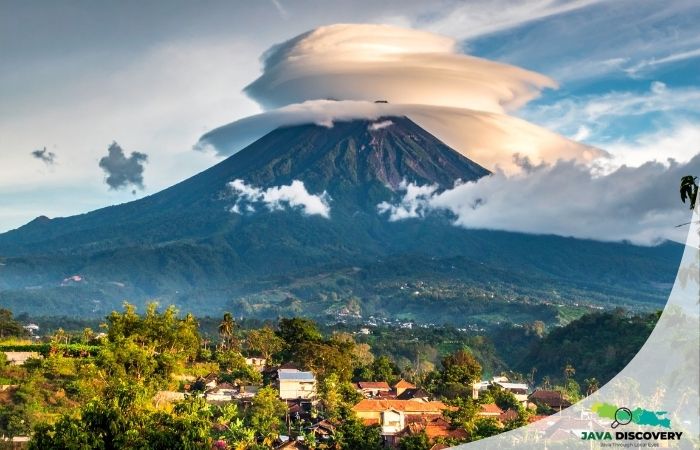
Mount Papandayan stands 2,665 meters above sea level and is classified as an active stratovolcano. Its most recent major eruption occurred in 2002, reshaping the mountain’s landscape and giving birth to new fumaroles, craters, and hot springs. When the morning mist clears, visitors are greeted by steaming vents, yellow sulfur crystals, and turquoise lakes that seem almost otherworldly.
The mountain’s name, “Papandayan,” is believed to come from the Sundanese word for “blacksmith.” Local folklore tells of a fiery forge deep within the mountain — an apt metaphor for the volcanic energy that continues to shape it. Even today, the crater lakes of Mount Papandayan reflect this duality: serene on the surface, yet alive with geothermal activity below.

The Mystical Crater Lakes
Kawah Baru: The Living Heart of the Volcano
Kawah Baru, or the “New Crater,” emerged after the destructive eruption of 1772 that destroyed dozens of villages. It is the most active part of the volcano, constantly exhaling sulfurous steam into the cool mountain air. Surrounding the crater are milky-blue pools — acidic yet mesmerizing — that shimmer with reflections of clouds and vapor.
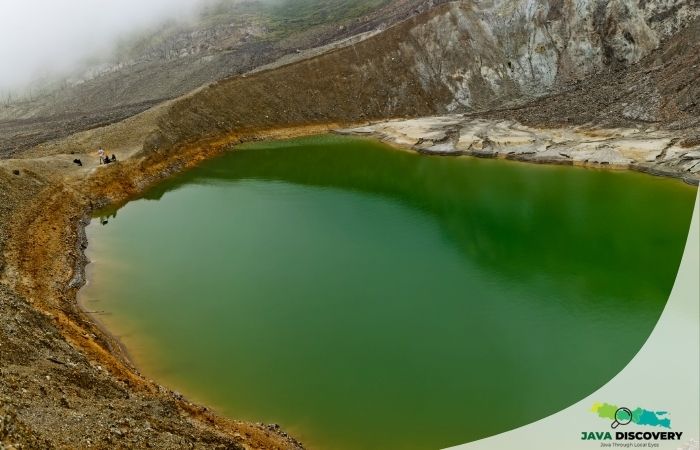
The lake’s surface changes color depending on the concentration of sulfur and minerals in the water. During the dry season, it glows a pale turquoise, while in the wet months, the hue deepens into emerald green. Standing near Kawah Baru feels like standing on another planet, where every sound is muted by the hiss of the earth’s breath.
Kawah Manuk: The Steaming Bird Crater
Just a short hike from Kawah Baru lies Kawah Manuk, or “Bird Crater,” named after the birds that often soar through the rising vapors. This crater is dotted with smaller hot pools and bubbling mud vents. Its sulfur lakes are smaller but more concentrated, producing intense yellow and white mineral deposits that paint the surrounding rocks.
Despite its hostile environment, life persists. Mosses cling to stones, and birds navigate the sulfur fog. This paradox of life amidst volatility is what makes Mount Papandayan’s crater lakes so captivating — they embody nature’s resilience and adaptability.
Kawah Emas and Kawah Nangklak
Further up the ridge, the lesser-known Kawah Emas (Golden Crater) and Kawah Nangklak are quieter, less active, and often missed by casual visitors. Kawah Emas earned its name from the golden hue of the sulfur crusts that glint under the sunlight. Meanwhile, Kawah Nangklak features a shallow crater lake with a jade-green tint, surrounded by fumaroles and steaming fissures. These spots are ideal for photographers seeking untouched angles of Mount Papandayan’s geothermal drama.
The Trek to the Crater Lakes
The trek to Mount Papandayan’s crater lakes begins at Camp David, the main base point accessible by vehicle from Cisurupan, Garut. From here, hikers follow a well-marked trail through a surreal landscape of smoking vents and twisted dead trees — remnants of the 2002 eruption. The first major stop is Kawah Baru, about 30 minutes uphill, followed by Kawah Manuk and Kawah Emas further along the rim.
For those seeking an extended adventure, the trail continues toward Tegal Alun, a vast edelweiss field perched at around 2,700 meters. On clear mornings, the contrast between the vibrant white flowers and the steaming craters below creates one of the most dramatic scenes in Java.
Myths, Science, and Spiritual Connection
Local residents regard Mount Papandayan as a sacred site. Some come to meditate or make offerings at fumaroles, believing the mountain to be home to ancestral spirits. The balance between reverence and science defines the way people engage with this living volcano. Geologists study its activity closely, while visitors often describe feeling a spiritual calm amid the hiss of steam and scent of sulfur.
Scientifically, the crater lakes serve as natural laboratories for studying volcanic gas emissions and geothermal processes. Researchers from Indonesian and international universities frequently monitor pH levels, temperature variations, and seismic activity around the lakes. These studies not only enhance understanding of volcanic behavior but also help predict future eruptions and ensure visitor safety.
Best Time to Visit
The dry season between June and September is the best time to explore Mount Papandayan’s crater lakes. During this period, the trails are dry and visibility is excellent, revealing the full palette of colors across the volcanic landscape. Early morning visits offer the most dramatic views, as the golden sunrise illuminates the rising sulfur steam.
Visitors should bring masks to minimize inhalation of sulfur gas and stay within marked paths, as the ground near the craters can be unstable. Despite these precautions, the area remains one of the most accessible active volcanoes in Indonesia — a rare chance to safely witness the raw power of Earth in motion.
A Living Canvas of Fire and Water
Few places in Java capture the island’s elemental contrasts like Mount Papandayan. Here, fire meets water, and destruction gives way to beauty. The crater lakes of Mount Papandayan are not static relics but ever-changing mirrors of time and transformation. Each visit reveals new hues, new sounds, and new insights into the planet’s restless heart.
Standing before these steaming lakes, one can’t help but feel both humbled and inspired — reminded that even in the harshest environments, life and beauty persist.