Community vs Individual Across Islands in Modern Indonesia


javadiscovery.com – In the heart of a bustling Javanese village, the sound of a rhythmic wooden slit drum, the kentongan, echoes through the humid afternoon air, signaling not a fire or a thief, but a simple call for a neighbor to help move a heavy teak cupboard. Within minutes, men emerge from their porches, wiping sawdust or soil from their hands, moving as a single unit without the need for a formal request or a paycheck. This organic, almost telepathic coordination is the hallmark of the Indonesian social landscape, where the concept of the self is inextricably woven into the fabric of the collective. The tension and harmony of Community vs Individual Across Islands is the quiet engine that powers the world’s largest archipelago. While the Western world often champions the hero’s journey and the sanctity of personal ambition, the Indonesian soul is anchored in “Gotong Royong” (mutual cooperation) and “Musyawarah” (consensus). From the terraced hills of Bali to the clan houses of North Sumatra, Community vs Individual Across Islands is a constant negotiation between personal desire and communal duty. To understand this dynamic is to see Indonesia not as a collection of 280 million separate egos, but as a vast, living tapestry where the strength of a single thread is measured only by how well it holds the others together.
The Javanese Rukun: The Erasure of the Self
On the island of Java, the dynamic of Community vs Individual Across Islands is governed by the paramount principle of “Rukun” (harmony). In Javanese philosophy, to be an individual in the Western sense, standing out or asserting one’s will against the group, is often viewed with deep suspicion. It is considered “kurang ajar” (poorly taught) or “ora ilok” (inappropriate). The individual is expected to be “halus” (refined), which often means subverting personal opinions to maintain the “ketentraman” (tranquility) of the collective. In this context, Community vs Individual Across Islands is not a battle, but a voluntary surrender of the “aku” (the I) for the sake of the “kita” (the we).
This is most visible during the “Slametan,” a communal feast that serves as the cornerstone of Javanese social life. When a family hosts a Slametan to celebrate a birth, a harvest, or even to seek protection from bad luck, the individual host disappears into the role of the provider, while the neighbors provide the validation. The success of the ritual depends not on the host’s personal happiness, but on the communal “mufakat” (agreement) that the event was conducted properly. Within Community vs Individual Across Islands in Java, the fear of “isin” (shame) acts as a powerful deterrent against individualistic behavior. To be “isin” is to be cast out of the social circle, a fate far more terrifying than any financial loss. Here, the individual finds safety in invisibility, flourishing only when they are in perfect sync with the village “paguyuban” (community).

The Balinese Banjar: The Sacred Collective
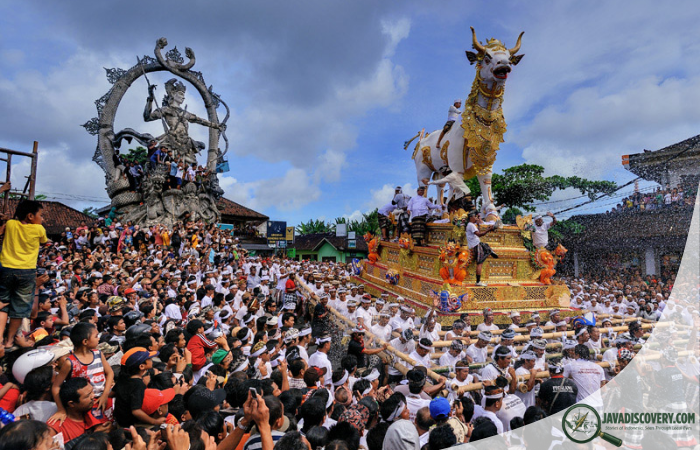
Crossing the narrow strait to Bali, the manifestation of Community vs Individual Across Islands takes on a more structured, almost mandatory character. Every Balinese Hindu individual is born into a “Banjar,” a local community unit that manages everything from religious ceremonies and marriage registrations to land disputes and garbage collection. In Bali, an individual literally cannot exist without the Banjar. If a family is expelled from their Banjar—a rare but devastating punishment known as “kasepekang”—they lose their right to use the local cemetery, their right to participate in temple rituals, and their social standing entirely.
In the framework of Community vs Individual Across Islands, the Balinese individual views their labor as “Ayahan,” a form of spiritual service to the community and the gods. Whether it is spending ten hours weaving intricate palm-leaf offerings or playing in a gamelan orchestra for a temple anniversary, the work is done collectively. There is no “star” of the gamelan; if one person plays too loudly or tries to show off their individual skill, the entire “kotekan” (interlocking pattern) collapses. Community vs Individual Across Islands in Bali proves that spiritual salvation is a team effort. The individual is the caretaker of a small piece of the cosmic order, but only the community has the power to maintain the balance between the “sekala” (seen world) and “niskala” (unseen world).
The Weight of the Clan in North Sumatra
Among the Batak people of North Sumatra, Community vs Individual Across Islands is dictated by the “Marga” (clan system) and the social philosophy of “Dalihan Na Tolu.” This “Three-Legged Stove” system defines an individual’s identity solely based on their relationship to others: as a wife-giver, a wife-taker, or a fellow clan member. An individual Batak man is never just “Togu” or “Binsar”; he is a representative of his ancestors and a guardian for his descendants. Every individual action, from achieving a high rank in the government to a personal moral failure, reflects directly on the entire Marga. The pressure of Community vs Individual Across Islands here is intense; the individual is the spearhead of the clan’s honor, and their life is a series of obligations to attend “Pesta Unjuk” (weddings) and “Pesta Mangokal Holi” (bone-turning ceremonies) to reinforce these bonds.
Survival and the Sea: The Bajau and Bugis Way
For the seafaring communities of the Bugis and the Bajau “Sea Nomads,” Community vs Individual Across Islands is a matter of literal life and death. When a Bugis schooner, a Phinisi, is being built on the sands of Bira, it is not a project of a single master shipwright, but a communal feat of engineering involving hundreds of hands. The individual’s knowledge of the tides and the timber is shared freely because the “kapal” (ship) belongs to the spirit of the village. On the open sea, the individual must be fiercely self-reliant, yet they are tethered to a network of “punggawa” (patrons) and “sawi” (clients) that ensures no one is ever truly alone in the face of a storm.
In the Bajau stilt villages of the Wakatobi or Togean islands, Community vs Individual Across Islands is reflected in the sharing of the catch. A successful fisherman who returns with a bounty of snapper or grouper does not store it in a private freezer for himself; the fish is shared among the houses on stilts. This “ekonomi berbagi” (sharing economy) is a insurance policy against the unpredictability of nature. Today I catch, tomorrow you catch. Within Community vs Individual Across Islands, the individual’s skill is recognized, but their greed is culturally prohibited. The sea is a vast, open space, but the social world of the sailor is tight, intimate, and relentlessly communal.
“A single bamboo pole is easily broken, but a bundle of bamboo can support a house. We do not ask why we must help our neighbor; we ask how we could ever survive if we did not.” — Pak Wayan, 62, Banjar Elder in Ubud.
The Rise of the Digital Individual: Urban Friction
As the skyscrapers of Jakarta and Surabaya rise higher, the traditional balance of Community vs Individual Across Islands is undergoing its most significant transformation in centuries. The “Gen Z” and “Millennial” generations, connected to the global “Individualist” culture via social media, are beginning to assert their personal identities in ways their grandparents would find incomprehensible. The “Selfie” is perhaps the ultimate symbol of this shift—a digital declaration of the “I” in a culture that has historically prioritized the “We.” Community vs Individual Across Islands is now being fought in the small screen of the smartphone.
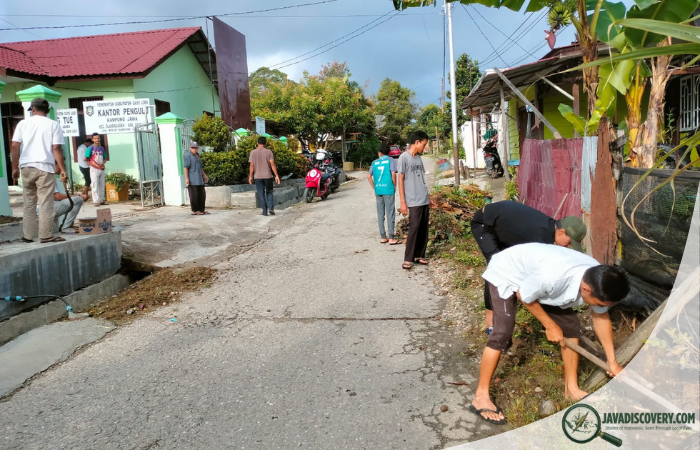
In urban settings, the “kos” (boarding house) culture has replaced the village square. Young professionals living away from their “kampung” (hometown) find themselves in a limbo where they crave the freedom of the individual but suffer from the “sepi” (loneliness) of being disconnected from the collective. Yet, even in the heart of the concrete jungle, Community vs Individual Across Islands adapts. The “WhatsApp Group” has become the new virtual village, where neighbors in an apartment complex organize “Arisan” (rotating credit unions) or “Kerja Bakti” (communal cleaning) via emojis. The Indonesian individual might want to be modern, but they find it almost impossible to be solitary.
| Region | Communal Anchor | Role of the Individual |
|---|---|---|
| Java | Paguyuban / Rukun | Maintaining social “halus” (refinement) and harmony. |
| Bali | Banjar | Performing “Ayahan” (ritual service) for the community. |
| Sumatra (Batak) | Marga / Clan | Acting as a spearhead for clan honor and lineage. |
| Eastern Islands | Gotong Royong | Survival through shared labor and resource distribution. |
The Concept of “Sungkan”: The Social Brake
A deep-seated psychological element in Community vs Individual Across Islands is “Sungkan,” a feeling of respectful reluctance or “awkwardness” that prevents an individual from asserting themselves too strongly. “Sungkan” is the internal voice that tells an Indonesian it is better to say “yes” and hide their disagreement than to say “no” and risk a social rift. Within Community vs Individual Across Islands, “Sungkan” acts as a social brake, slowing down individualistic impulses for the sake of communal peace.
While Westerners might interpret “Sungkan” as a lack of confidence or transparency, in the Indonesian context, it is a sophisticated form of “empati” (empathy). By being “sungkan,” the individual acknowledges that their desires are not the center of the universe. This psychological barrier ensures that Community vs Individual Across Islands remains balanced. However, in the modern workplace, “Sungkan” is often criticized as a barrier to “inovasi” (innovation), as subordinates may be “sungkan” to correct a superior’s mistake. This is where the ancient Community vs Individual Across Islands dynamic meets the modern demand for efficiency, creating a uniquely Indonesian corporate culture where feedback is often delivered in a series of careful, indirect metaphors.
The Megalithic Collective: Building for the Dead
In the highlands of Sumba and Toraja, Community vs Individual Across Islands reaches its most monumental heights during the construction of tombs and traditional houses. A single family, no matter how wealthy or ambitious, cannot drag a ten-ton limestone slab across a mountain to build a megalithic grave. To do so requires the “tenaga” (energy) of hundreds of people from neighboring villages. In Sumba, Community vs Individual Across Islands is a physical reality; the individual “owner” of the tomb is indebted to the community for their labor, a debt that is repaid through massive feasts of buffalo and pig.
This “ekonomi ritual” (ritual economy) ensures that wealth is constantly redistributed. An individual who accumulates too much “harta” (wealth) without sharing it through communal rituals is viewed as “sakit” (spiritually ill). The role of the individual in Community vs Individual Across Islands in these regions is to be a funnel for resources—gathering wealth only to release it back into the community during great rites of passage. This prevents the rise of a permanent, isolated elite and keeps the “jiwa” (spirit) of the village vibrant. The individual’s legacy is not their bank account, but the number of people who came to pull their stones.
Conclusion: The Strength of the Shared Breath
Community vs Individual Across Islands is the defining characteristic of the Indonesian identity. It is a philosophy that believes a person is not a solitary island, but a part of a “Nusantara” (archipelago). While the forces of globalization and the “ego” of the digital age continue to push for more individualism, the deep-seated “ruh” (spirit) of the collective remains incredibly resilient. Community vs Individual Across Islands is the reason why, in times of disaster—whether a tsunami in Aceh or an earthquake in Palu—the first people on the scene are not the government or NGOs, but neighbors with buckets and shovels.
The Indonesian individual knows that they are protected by a thousand invisible strings of “persaudaraan” (brotherhood). They understand that while the “aku” can dream, only the “kita” can build. Community vs Individual Across Islands is a lesson in humility and resilience for the rest of the world. It teaches us that the greatest human achievements are not the result of a single genius, but of a community that breathes together. As the sun sets over the thousands of islands, and the lamps are lit in the “kampungs” and “kotas” alike, the quiet murmur of “musyawarah” continues. In the heart of Indonesia, the individual is never lost; they are simply found in the eyes of their neighbor. To preserve Community vs Individual Across Islands is to preserve the very essence of humanity in the archipelago—a world where no one walks alone because the path belongs to everyone.