How Children Learn Emotional Restraint in Javanese Life

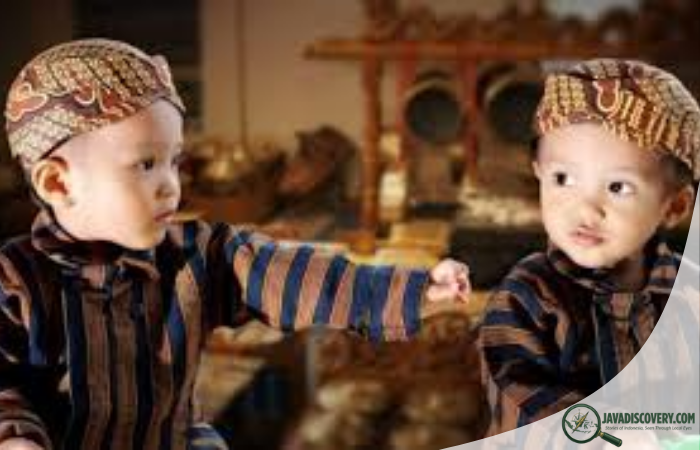
javadiscovery.com – In a quiet village courtyard, a child stumbles and begins to cry. The sound is soft at first, then grows louder. An older sibling approaches, not with urgency, but with calm presence. A gentle hand rests on the child’s shoulder. Words are spoken softly, almost like a whisper carried by the breeze. The crying fades, not abruptly, but gradually, as if guided back into stillness. Around them, daily life continues, unbroken.
In Javanese culture, moments like this are not isolated. They form part of a continuous process through which children learn how to manage their emotions. Emotional restraint is not imposed suddenly or taught through strict instruction. It is cultivated slowly, through observation, repetition, and subtle guidance embedded in everyday life.
To understand this process is to see how cultural values are passed not through rules alone, but through lived experience.

Emotion as Something to Be Managed
From an early age, children in Javanese society are introduced to the idea that emotions are natural, but must be managed carefully. Expressions of anger, frustration, or excessive excitement are gently moderated.
This does not mean emotions are denied. Rather, children are guided to express them in ways that do not disrupt social harmony.
Emotional restraint becomes part of social awareness.
Learning Through Observation
Much of this learning occurs through observation. Children watch how adults respond to situations, noting their calm tone, measured reactions, and controlled expressions.
These patterns become internalized over time.
Without formal lessons, children begin to mirror these behaviors, gradually shaping their own responses.
Observation becomes a primary teacher.
Soft Correction Instead of Confrontation
When a child expresses strong emotion, correction is often delivered gently. Rather than raising voices or imposing strict discipline, adults may respond with calm words or subtle cues.
This approach reduces escalation and models the behavior expected.
Children learn not only from what is said, but from how it is said.
The tone of correction becomes part of the lesson.
The Role of Language
Language plays a role in shaping emotional restraint. Words chosen by adults often emphasize calmness, patience, and understanding.
Children are encouraged to reflect rather than react.
This use of language guides emotional processing.
It helps children develop awareness of their internal state.
Social Expectations and Awareness
As children grow, they become more aware of social expectations. They learn that their behavior affects others, and that maintaining harmony is important.
This awareness encourages self-regulation.
Emotional restraint becomes linked to respect and consideration.
It is no longer only personal, but social.
Gradual Internalization
Over time, the external guidance provided by adults becomes internalized. Children begin to regulate their emotions independently, without immediate intervention.
This shift marks the development of self-control.
Restraint becomes part of their natural response.
It is carried into adolescence and adulthood.
The Balance Between Expression and Control
Emotional restraint does not eliminate expression. Children still laugh, play, and show affection openly.
The emphasis lies in balance, ensuring that emotions are expressed appropriately within context.
This balance allows for both individuality and social harmony.
It reflects a nuanced understanding of emotion.
The Influence of Family Environment
Family plays a central role in this process. Daily interactions within the household provide continuous opportunities for learning.
Parents, siblings, and extended family members all contribute to shaping behavior.
This collective influence reinforces consistent patterns.
It creates a stable environment for development.
Silence as Guidance
At times, guidance comes not through words, but through silence. A pause, a look, or a shift in atmosphere can signal that a behavior is inappropriate.
Children learn to interpret these cues.
This subtle form of communication encourages awareness without direct confrontation.
It reinforces emotional sensitivity.
Adapting to Modern Influences
In contemporary settings, children are exposed to different forms of expression through media and education. These influences can introduce more direct ways of expressing emotion.
Despite this, traditional values of restraint remain present.
Children navigate these influences by combining different approaches.
This creates a dynamic process of adaptation.
Misunderstood Quietness
From an outside perspective, emotionally restrained children may appear reserved or passive. However, this quietness often reflects control rather than absence of feeling.
Understanding this distinction is important.
It reveals the depth of emotional awareness developed through cultural practice.
Restraint as Strength
In Javanese culture, emotional restraint is often seen as a form of strength. It demonstrates the ability to manage oneself in complex social situations.
This strength is not visible in dramatic action, but in quiet consistency.
It reflects discipline and awareness.
A Lifelong Practice
The learning of emotional restraint does not end in childhood. It continues throughout life, refined through experience and interaction.
Early lessons provide the foundation, but each stage of life adds new layers of understanding.
This ongoing process keeps the value alive.
Growing Into Balance
As the child in the courtyard regains composure, the moment passes without disruption. The lesson is not marked or announced. It settles quietly, becoming part of memory and habit.
In these small, repeated moments, children grow into an understanding of balance. They learn that emotions are not suppressed, but guided, shaped, and aligned with the rhythms of social life.
Through this process, emotional restraint becomes more than behavior. It becomes a way of being, carried gently into the wider world.