The Spread of Literacy in Colonial Era Java

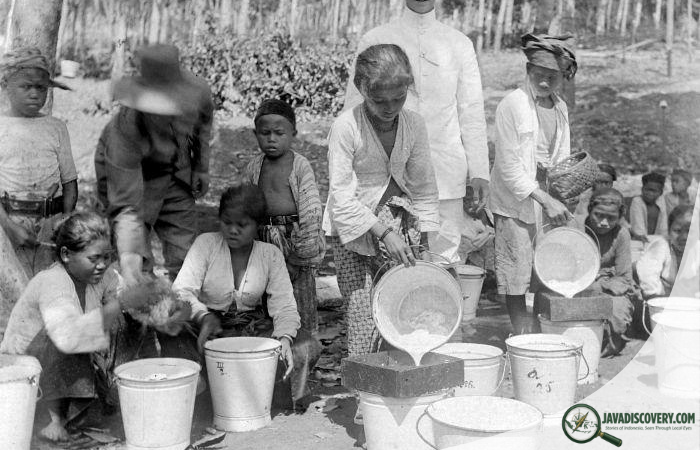
javadiscovery.com – In a wooden classroom with open windows and uneven floors, a group of children sit in rows, their hands carefully tracing unfamiliar shapes onto slates. Outside, the rhythms of village life continue unchanged, but inside, something subtle begins to shift. Letters take form, sounds are linked to symbols, and for the first time, knowledge becomes something that can be fixed, revisited, and carried beyond memory.
The spread of literacy in Java during the colonial period marked a profound transformation in how knowledge was accessed and shared. While earlier systems of learning relied on oral tradition and lived experience, the introduction of formal schooling and written language reshaped the intellectual landscape. This shift did not occur evenly or without tension. It unfolded gradually, influenced by policy, power, and the realities of colonial governance.
Literacy became both a tool and a boundary.

Before Widespread Literacy
Prior to colonial intervention, literacy in Java existed but was limited to certain groups. Religious scholars, court officials, and scribes maintained written traditions.
Texts were often in specialized scripts.
Access was restricted.
Knowledge remained concentrated.
Literacy was not universal.
The Introduction of Colonial Education
With the establishment of colonial administration, new forms of schooling were introduced. These institutions aimed to produce a limited number of educated individuals who could support administrative needs.
Schools were structured.
Curricula were defined.
Instruction included reading and writing.
Education became formalized.
Language and Power
The language of instruction played a crucial role in shaping access to literacy. Colonial schools often prioritized certain languages over local ones.
This created layers of access.
Some gained advantage.
Others remained excluded.
Language reflected power dynamics.
Expansion and Limitation
Over time, literacy began to spread beyond elite circles. More individuals gained basic reading and writing skills.
However, access remained uneven.
Rural areas lagged behind.
Opportunities varied by social status.
Growth was gradual.
Impact on Social Mobility
Literacy opened new possibilities for certain أفراد. Those who could read and write gained access to administrative roles and new forms of employment.
Education created opportunity.
It altered social positions.
It introduced new aspirations.
Literacy influenced mobility.
Transformation of Knowledge
As literacy expanded, knowledge began to shift from oral to written forms. Information could be recorded, stored, and distributed.
Texts became reference points.
Memory was supplemented by writing.
Knowledge gained permanence.
The mode of learning changed.
Emergence of Local Writers
Increased literacy led to the emergence of local writers and thinkers. They began to document experiences, ideas, and observations.
Voices expanded.
Perspectives diversified.
Writing became expression.
Literacy enabled authorship.
Education and Identity
Literacy also influenced how individuals understood themselves and their place in society. Access to written material introduced new ideas and perspectives.
Identity evolved.
Awareness increased.
Connections extended beyond local context.
Reading shaped perception.
Tension Between Systems
The rise of formal education did not fully replace traditional systems of learning. Instead, the two coexisted, sometimes in tension.
Oral tradition persisted.
Practical knowledge remained relevant.
New and old systems interacted.
Change was layered.
Literacy as Control and Empowerment
For colonial authorities, literacy served administrative purposes. It enabled record-keeping and governance. At the same time, it provided individuals with tools for expression and understanding.
This dual role created complexity.
Literacy could reinforce control.
It could also enable awareness.
Its impact was not singular.
Gradual Integration into Society
As generations passed, literacy became more integrated into daily life. Written communication expanded beyond formal institutions.
Letters were exchanged.
Records were kept.
Reading became more common.
Literacy entered routine life.
A Shift in the Way Knowledge Lives
As the classroom empties and the children step back into the outside world, the marks they have learned remain with them. They carry a new way of engaging with knowledge, one that complements but does not entirely replace older forms.
In colonial Java, the spread of literacy marked a turning point. It changed how knowledge was stored, accessed, and shared, reshaping both individual experience and collective understanding.
Within this transformation, literacy became more than a skill. It became a bridge between worlds, connecting memory with text, tradition with change, and the spoken word with the written page.