Traditional Keris Polishers Jamasan Chemistry Ritual Sacred Blades

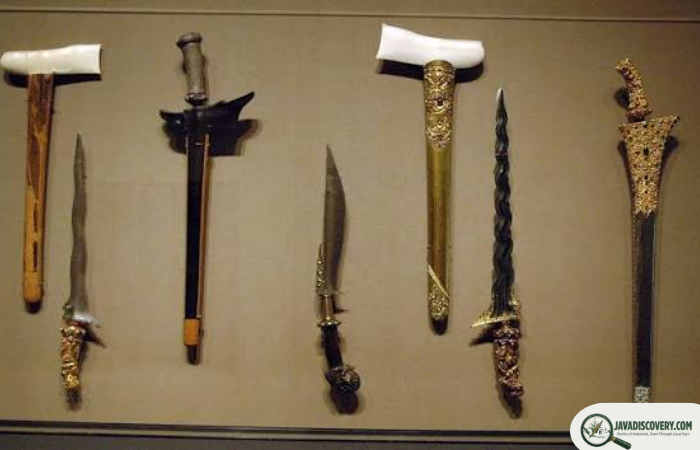
javadiscovery.com – A sharp, herbaceous scent of sour lime juice, fermented coconut water, and fragrant botanical oils fills the quiet morning air inside a traditional Javanese courtyard in Surakarta. Sitting cross-legged beside a shallow wooden basin, a master blade custodian—known in Javanese as a empu jamas or prajurit jamas—carefully unsheaths an ancient, wavy-bladed dagger (*keris*). The blade, forged centuries ago from folded layers of iron, steel, and meteoric nickel, bears dark stains of oxidation and age. Through the meticulous, age-old ritual and chemical purification process known as Jamasan Keris (or Mjamas), these traditional polishers preserve both the physical integrity and the spiritual aura (*tuah*) of Java’s most revered sacred weapons. Operating at the intersection of classical metallurgy, organic chemistry, and ancestral spiritual devotion, the practice of *mjamas* ensures that Java’s iron heritage remains vibrant for future generations.
The Sacramental Timing: Suro and Spiritual Purification
While routine maintenance occurs throughout the year, the grand annual season for *Jamasan Keris* takes place during the sacred month of *Suro* (the first month of the Javanese lunar calendar, coinciding with 1 Muharram). For Javanese communities, this period represents a cosmic threshold—a time for reflection, spiritual cleansing (*ruwatan*), and honoring ancestral heirlooms (*pusaka*):
- Introspection and Reverence: Cleaning a *keris* is never viewed as mere physical chores. The polisher undergoes spiritual preparation, often fasting (*tirakat*) and maintaining quiet concentration to show respect to the ancestral blacksmith (*Empu*) who forged the blade.
- Harmonizing Physical and Unseen Domains: According to Javanese cosmology, a *keris* is a living spiritual vessel. The *jamasan* ritual removes physical rust (*karat*) while re-energizing the unseen spiritual guardian (*khodam*) embedded within the folded steel.
The Chemistry of Jamasan: A Step-by-Step Cleansing
The traditional polishing process is a sophisticated multi-stage procedure that uses entirely natural, locally sourced organic compounds to clean, etch, and preserve delicate layered metals without destroying the blade’s structural geometry:
- 1. Washing and Rust Removal (*Mutih*): The blade is soaked in a acidic bath prepared from fermented coconut water and fresh lime juice (*citric acid*). The mild organic acids gently dissolve iron oxide (rust) without eating into the underlying solid metal. The polisher uses wild hibiscus leaves or soft brushes to scrub away loosened debris.
- 2. Acid Etching and Contrast Revealing (*Warangi*): Once clean and silvery-white (*mutih*), the blade undergoes its most crucial chemical transformation: dipping into a solution of *warangan* (arsenic trioxide dissolved in lime juice). The arsenic reacts selectively with the metal layers—darkening the high-carbon iron to a deep jet-black while leaving the nickel or meteoric layers bright silvery-white. This etching brings out the mesmerizing, wood-grain pattern known as *pamor*.
- 3. Neutralization and Botanical Oiling (*Minyaki*): To stop the acid reaction and prevent future oxidation, the etched blade is rinsed thoroughly in clean water and dried completely over mild heat or sun. Finally, it is coated with fragrant natural oils—typically a blend of sandalwood oil (*minyak cendana*), jasmine, and mineral oil—creating a protective moisture barrier that shields the blade from tropical humidity.
The Pamor: Unveiling the Blacksmith’s Fingerprint
The ultimate objective of the *mjamas* process is the vivid revelation of the *pamor*—the distinct decorative pattern formed by the labor-intensive pattern-welding process used by Javanese blacksmiths. By folding iron and nickel-rich metal hundreds of times, ancient *Empu* created unique, permanent designs embedded deep within the steel structure:
- Symbolic Pamor Motifs: Each *pamor* pattern carries specific spiritual meanings and symbolic blessings, such as *Beras Wutah* (scattered rice, symbolizing prosperity), *Udan Mas* (golden rain, denoting wealth), or *Seker Bawang* (protection against misfortune).
- Preserving Historical Integrity: Improper chemical cleaning using harsh modern synthetic rust-removers can permanently erode the microscopic nickel layers, erasing the *pamor* forever. The gentle, traditional techniques of the *mjamas* ensure the historical story written in the steel remains intact.
Preserving the Sacred Steel Legacy
Recognized globally when UNESCO inscribed the Indonesian Keris on the Representative List of the Intangible Cultural Heritage of Humanity, the art of the *keris* relies entirely on the knowledge of its custodians. The traditional polishers of Java continue to perform their quiet work inside royal courts (*kraton*), village workshops, and private collections across the island.
Through their mastery of natural chemistry, patience, and ancestral reverence, the *mjamas* keep Java’s sacred steel glowing—bridging the world of ancient blacksmiths with the living culture of today.