Generational Conflict in Farming Families Across Rural Java

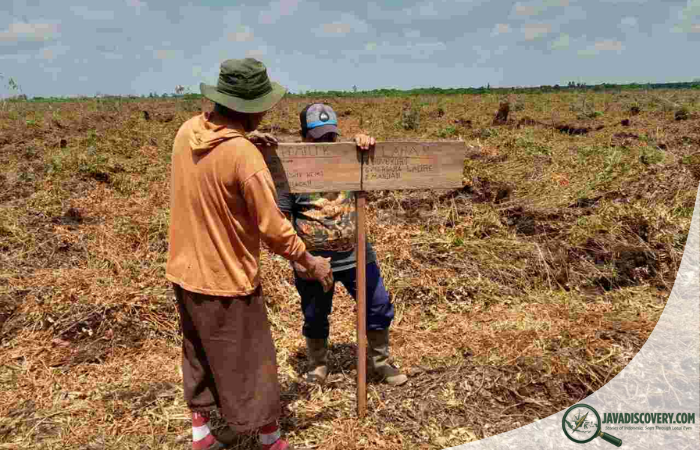
javadiscovery.com – The morning begins before sunrise in many villages across Java. A faint glow spreads across rice fields still wet with dew. Roosters crow somewhere behind rows of bamboo houses. In the distance, farmers move slowly through narrow paths between paddies, carrying hoes over their shoulders.
For generations, this rhythm has shaped village life. Farming is not merely a job in rural Java. It is a tradition, a family inheritance, and a relationship with land that stretches back centuries.
Yet beneath the quiet beauty of the countryside, tensions are growing inside many farming households. Parents who spent their lives cultivating rice fields now watch their children pursue different dreams. Young people leave villages for cities, seeking opportunities that agriculture can no longer guarantee.

This generational divide is reshaping the future of farming in Java. What once seemed like an unbreakable chain of knowledge passed from father to son, or mother to daughter, is beginning to loosen.
A Life Built Around the Land
For older generations of Javanese farmers, agriculture is deeply tied to identity.
Many learned farming not through formal instruction but through observation and repetition. Children followed their parents into the fields, watching how seedlings were planted, how irrigation channels were maintained, and how harvest seasons unfolded according to traditional calendars.
The agricultural year in Java has long been guided by knowledge systems that combine observation of weather patterns, lunar cycles, and inherited wisdom.
In regions around :contentReference[oaicite:0]{index=0} and :contentReference[oaicite:1]{index=1}, older farmers still speak about planting seasons with quiet confidence.
“The land tells us when it is ready,” says Pak Wiryo, a farmer in his seventies. His hands are rough from decades of working in flooded paddies. “If you watch carefully, you will understand the signs.”
For him, farming is not simply economic activity. It is a relationship between people, soil, water, and time.
Children Growing Up Between Two Worlds
While older farmers hold tightly to these traditions, younger generations experience a different reality.
Many village children now grow up surrounded by influences far beyond the boundaries of their fields. Smartphones, social media, and television bring images of urban lifestyles into rural homes.
Education also plays a significant role in shaping aspirations. Parents who once struggled to complete primary school now encourage their children to pursue higher education.
For young people, these opportunities create difficult choices.
Should they return to the village after graduation and continue farming? Or should they seek work in cities where salaries appear more stable?
For many, the decision seems obvious.
“I respect what my father does,” says Dimas, a university student from a farming family in East Java. “But farming is unpredictable. One bad harvest can erase a year of effort.”
His words echo the concerns of many young Indonesians who view agriculture as physically demanding yet economically uncertain.
The Economics Behind the Divide
At the center of generational conflict lies a simple but powerful question. Can farming still provide a sustainable livelihood?
Small-scale farmers in Java often work on limited land holdings. Many cultivate less than one hectare of rice fields, which makes it difficult to generate consistent income.
Rising costs for fertilizer, seeds, and irrigation infrastructure further complicate the equation. Meanwhile, market prices for crops can fluctuate dramatically.
These economic pressures are visible across regions such as :contentReference[oaicite:2]{index=2} and :contentReference[oaicite:3]{index=3}.
Farmers must constantly adapt to changing conditions while balancing household expenses.
For younger family members, the unpredictability of agriculture can feel discouraging.
Urban employment, even if modest, often appears more secure than relying on weather patterns and fluctuating commodity prices.
Conversations That Shape Family Futures
Inside many rural homes, these realities lead to quiet but significant disagreements.
Parents who spent their lives farming sometimes feel disappointed when children choose different paths. The expectation of continuing family land traditions remains deeply embedded in rural culture.
Yet younger generations often interpret these expectations differently.
“My father says the land has fed our family for generations,” explains Sari, whose parents grow rice in Central Java. “But he also worked very hard and never had time to rest. I want something different.”
Such conversations rarely turn into open arguments. In Javanese culture, respect for elders discourages direct confrontation.
Instead, generational conflict often unfolds through subtle negotiation.
Children may delay decisions about returning to the village. Parents may quietly hope that urban ambitions eventually fade.
The Emotional Weight of Leaving
When young people choose to leave farming behind, the decision carries emotional consequences.
Fields that once echoed with family activity gradually become quieter. Older farmers must continue managing land with fewer helping hands.
Some families lease fields to neighbors or hire seasonal laborers to compensate for the absence of younger relatives.
Yet the emotional dimension of this shift is difficult to measure.
For many parents, the land represents more than property. It holds memories of childhood, marriage, and family survival.
Watching the next generation turn away from farming can feel like witnessing the fading of a shared legacy.
Young Farmers Reimagining Agriculture
Despite these tensions, a growing number of young Indonesians are beginning to rethink the future of farming.
Instead of abandoning agriculture entirely, some are experimenting with new approaches that combine traditional knowledge with modern technology.
These younger farmers explore organic agriculture, digital marketing, and direct sales to urban consumers.
In parts of Central Java, youth-led farming cooperatives have begun introducing sustainable cultivation methods while promoting local produce through online platforms.
This hybrid model allows younger generations to reconnect with agriculture while reshaping it to fit contemporary economic realities.
For families experiencing generational conflict, such innovations offer a glimpse of compromise.
The Role of Education and Technology
Education plays an increasingly complex role in the transformation of rural farming families.
While higher education often encourages young people to pursue urban careers, it can also provide tools that strengthen rural economies.
Agricultural science, environmental management, and rural entrepreneurship programs are gradually attracting students interested in improving farming systems.
Technology is also reshaping how young farmers approach agriculture.
Mobile applications now provide weather forecasts, market price updates, and cultivation advice. These tools help farmers make more informed decisions while reducing risks associated with unpredictable conditions.
For younger generations comfortable with digital technology, such resources make agriculture appear more adaptable and innovative.
Preserving Knowledge Across Generations
One of the greatest challenges facing rural Java is ensuring that traditional farming knowledge does not disappear.
Older farmers possess deep understanding of soil conditions, irrigation systems, and seasonal cycles developed through decades of experience.
If younger generations abandon agriculture entirely, this knowledge could fade.
Some villages have begun organizing informal gatherings where elder farmers share techniques with younger residents interested in learning.
These exchanges often take place during planting or harvest seasons, when practical demonstrations can accompany storytelling and instruction.
Through these interactions, knowledge continues to circulate even as farming practices evolve.
A Landscape in Transition
Across Java, the countryside remains one of the island’s defining landscapes. Rice paddies stretch toward distant hills. Irrigation channels glimmer under afternoon sun. Farmers still move slowly through fields, tending crops with patience and care.
Yet the future of this landscape depends on how generational relationships within farming families continue to unfold.
The tension between tradition and change is not unique to Java. Around the world, rural communities face similar questions about the sustainability of agriculture and the aspirations of younger generations.
In Javanese villages, these questions are answered one family at a time.
Some children return after years in the city, bringing new ideas back to the land. Others build lives elsewhere while maintaining emotional ties to their rural origins.
Meanwhile, older farmers continue waking before dawn, stepping quietly into fields that have sustained their families for decades.
Within the quiet rhythm of rural life, generational conflict becomes part of a larger story about adaptation, resilience, and the uncertain future of agriculture in Java.