The Life Cycle of Everyday Objects

javadiscovery.com – In the sun-drenched “pekarangan” (home garden) of a village in Wonosobo, the life cycle of everyday objects begins not in a factory, but in the very soil that sustains the household. For the Javanese, an object is never a static “thing”; it is a “proses” (process) that moves through stages of birth, service, and eventual return to the elements. The life cycle of everyday objects is governed by the principles of “nrimo” (acceptance) and “manunggal” (unity), where the material’s “nyawa” (soul) is respected at every turn. From the green bamboo culm that becomes a “tampah” (winnowing tray) to the clay that is fired into a “kendi” (water pitcher), the life cycle of everyday objects reflects a “keberlanjutan” (sustainability) that was practiced long before the term became a global trend. In a culture that values “alus” (refinement), an object’s “tua” (old age) is not seen as a decline, but as an accumulation of “berkah” (blessing) and “sejarah” (history), until it finally dissolves back into the “bumi” (earth) to nourish the next generation of growth.
The Birth: Harvesting from the Living Warehouse
To understand the local reliance on the life cycle of everyday objects, one must first witness the “undhuh” (harvest) of raw materials. Unlike industrial systems that rely on distant supply chains, the Javanese village operates from a “living warehouse.” The life cycle of everyday objects like the “sapu lidi” (palm leaf rib broom) begins at the base of the “kelapa” (coconut) tree. The fallen fronds are gathered, and the ribs are stripped by hand—a ritual of “pengambilan” (taking) that requires the permission of the “penunggu” (spirit guardian) of the grove. This initial stage of the life cycle of everyday objects is marked by “syukur” (gratitude), ensuring that the resource is taken without “serakah” (greed).
The “pembentukan” (shaping) phase is where the human “batin” (inner spirit) meets the material. Whether it is a potter kneading the “tanah liat” (clay) or a weaver splitting “bambu,” this stage of the life cycle of everyday objects is a “meditasi” (meditation). The artisan does not force the material; they “follow” its grain and its “sifat” (nature). This ensures that the object is “awet” (durable) and “pas” (perfectly fitted) for its future function. The life cycle of everyday objects at this birth stage is a “dialog” (dialogue) between the “manusia” (human) and the “alam” (nature), resulting in a tool that is functionally efficient and spiritually “hidup” (alive).

The Service: The Era of “Kegunaan” and Character
Once an object enters the home, the most active phase of the life cycle of everyday objects begins. A “cobek” (stone mortar) or a “genthong” (water jar) becomes a member of the “keluarga” (family). In this stage, the life cycle of everyday objects is characterized by “perawatan” (maintenance). A Javanese “ibu” (mother) does not just use a tool; she “ngopeni” (nurturingly maintains) it. The stone is seasoned with oil, the clay is kept cool, and the wood is rubbed with “minyak” (oil). This care extends the life cycle of everyday objects far beyond their expected “masa pakai” (usage period), turning them into “pusaka” (heirlooms) that carry the “roso” (feeling) of the ancestors.
As the object serves, it develops “patina”—a physical record of its “pengalaman” (experience). A “talenan” (cutting board) worn thin in the center or a “gayung” (coconut shell ladle) polished smooth by thousands of dips is a badge of “kerja keras” (hard work). In the life cycle of everyday objects, these signs of wear are not “cacat” (defects), but “tanda urip” (signs of life). The object becomes “alus” through use, losing its “kasar” (rough) edges as it integrates into the daily “rhythm” of the “pawon” (kitchen). The life cycle of everyday objects in the Javanese home is a journey toward “kesempurnaan” (perfection) through service.
The Decay: The Graceful Return to Earth
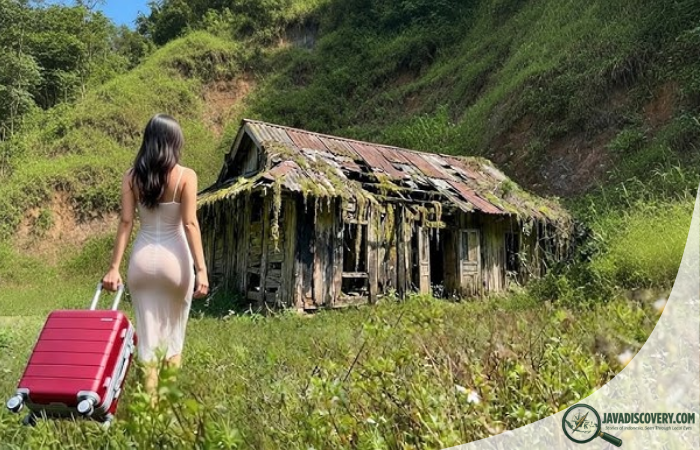
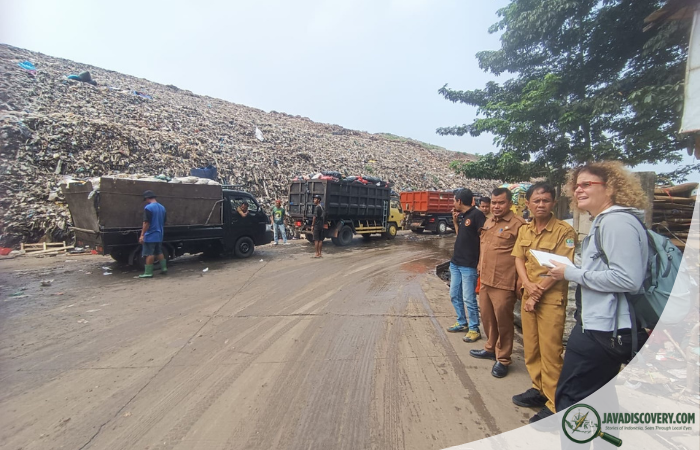
The final stage of the life cycle of everyday objects in the Javanese village is perhaps the most unique: the “kembali” (return). Unlike modern plastic waste that clogs the “selokan” (ditches), traditional Javanese objects are “fana” (impermanent). When a bamboo tray is finally too brittle to be repaired, it is broken down. Part of it might be used as “umpan geni” (kindling) for the “luweng” (stove), where its energy is transformed into “panas” (heat) to cook the family’s rice. In this way, the life cycle of everyday objects continues in a different “wujud” (form), serving the household even in its “kematian” (death).
The “sisa” (remnants) that are not burned are returned to the “kebun” (garden). The life cycle of everyday objects like the “tikar” (mat) made of “mendong” grass ends in the “kompos” (compost) pile. Within a few months, the fibers rot and merge with the “lempung” (clay soil), becoming “pupuk” (fertilizer) for the next harvest of “padi” or “sayur.” This “lingkaran” (circle) is the ultimate “kejujuran” (honesty) of the material. The life cycle of everyday objects is a “closed loop” where nothing is wasted and everything is “halal” (permissible) for the earth to consume.
Conclusion: The Eternal Circle of “Lestari”
The life cycle of everyday objects also acts as a “pengingat” (reminder) of our own “kefanaan” (mortality). Standing before a heap of “kompos” that was once a sturdy fence or a comfortable mat, a Javanese person is reminded of the phrase “Mati sajroning urip”—living while preparing for the end. The life cycle of everyday objects mirrors the human journey, teaching us to be “berguna” (useful) while we are here and “ikhlas” (at peace) when it is time to return. The “siklus” (cycle) is the teacher, and the object is the “kurikulum” (curriculum) of a life lived in “harmoni.”
As the sun sets and the villagers return to their “omah” (homes), the tools are cleaned and put away, each one resting in its “panggonan” (place). The life cycle of everyday objects continues in the silence of the night—the stone cooling, the clay breathing, and the bamboo waiting for the morning’s work. In the heart of Java, nothing is ever truly “gone”; it is only “waiting” for its next “wujud” in the eternal circle. As long as the villagers remember to “ngopeni” their world, the life cycle of everyday objects will remain the “invisible thread” that keeps the island “lestari” (everlasting).