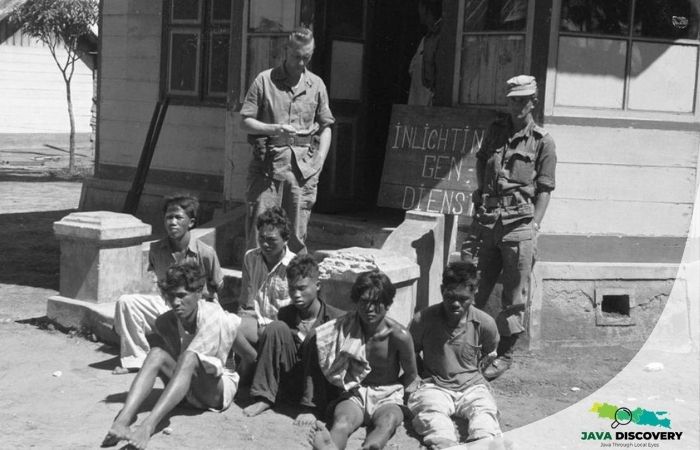
Colonial Resistance Grassroots Efforts in Old Java

javadiscovery.com — While history books often focus on the grand diplomatic maneuvers of sultans and the strategic battles of generals, the true fire of defiance in the East Indies was often lit in the modest “pendopos” of village elders and the muddy rice fields of the peasantry. Colonial Resistance: Grassroots Efforts in Old Java is a tribute to the “small” acts of rebellion that made the Dutch occupation a constant struggle. For every major uprising like the Java War, there were thousands of silent strikes, spiritual boycotts, and localized acts of sabotage. These were the efforts of the “wong cilik” (common people) who used their culture, their faith, and their communal bonds as weapons against a technologically superior foe. To understand Colonial Resistance: Grassroots Efforts in Old Java is to look beyond the bayonets and the forts and see the power of a people who refused to be broken. It is a story of resilience that proves that the path to independence was paved not just by the elite, but by the hands of the farmers, the weavers, and the mystics of the Javanese heartland.
The Samin Movement: Radical Non-Violence
At the turn of the 20th century, a farmer named Samin Surontiko began a movement that remains one of the most unique examples of Colonial Resistance: Grassroots Efforts in Old Java. The Saminists (Saminism) didn’t use krises or guns; they used the “logic of the earth.” They refused to pay taxes, they refused to follow the colonial forestry laws, and they refused to speak Dutch, opting instead for a “low” Javanese dialect that stripped away the social hierarchies the Dutch tried to exploit.
When Dutch officials arrived to collect taxes, the Saminists would simply sit on the ground and say, “The land is the earth, and the earth is mine.” In the context of Colonial Resistance: Grassroots Efforts in Old Java, this was a form of radical civil disobedience that predated Gandhi’s Salt March. They challenged the very legitimacy of colonial ownership by arguing that the state was an artificial construct. This grassroots effort turned the Javanese village into a fortress of quiet non-cooperation, proving that sometimes, the most effective resistance is simply saying “no” together.

The “Juru Kunci”: Guardians of Sacred Sabotage
In Colonial Resistance: Grassroots Efforts in Old Java, the landscape itself was a participant in the struggle. The “Juru Kunci” (guardians of sacred sites) and local mystics often used “klenik” (occult knowledge) to demoralize colonial forces. They would spread rumors that certain roads were cursed or that Dutch construction projects on ancestral lands would invite the wrath of the spirits. While the Dutch dismissed this as superstition, it had a very real effect on the local workforce.
This was a form of psychological Colonial Resistance: Grassroots Efforts in Old Java. By framing colonial expansion as a violation of the spiritual order, these grassroots leaders ensured that the Javanese laborers were uncooperative, slow, and prone to “disappearing” from work sites at crucial moments. The “ghosts” of Java became the invisible allies of the resistance, making the cost of occupation—in both time and morale—unbearably high for the administrators in Batavia.
“The Dutchman owns the paper, but we own the soil. He can write a law, but he cannot make the rice grow if the spirits are angry. Our silence is our spear.” — Traditional oral history from the Blora region.
The Pesantren Network: Education as Insurgency
Throughout the 19th century, the “Pesantren” (Islamic boarding schools) served as the underground bunkers of Colonial Resistance: Grassroots Efforts in Old Java. While the Dutch controlled the cities and the trade routes, the rural interior was the domain of the “Kyais” (religious teachers). These schools were more than religious centers; they were safe houses for dissidents and training grounds for a “moral resistance.”
In the framework of Colonial Resistance: Grassroots Efforts in Old Java, the Kyais taught the concept of “Jihad” not just as a physical war, but as a struggle for dignity against “Kafir” (infidel) oppression. They used the Arabic-Javanese script known as “Pegon” to communicate secret messages that the Dutch censors could not read. This grassroots network created a parallel society that the colonial government could never fully penetrate. When Prince Diponegoro rose in rebellion, it was this pre-existing network of students and teachers that provided him with his most loyal and disciplined soldiers.
Economic Sabotage: The “Petani” Strikes
The “Cultivation System” (Cultuurstelsel) forced Javanese farmers to grow export crops like coffee and sugar instead of rice. In response, Colonial Resistance: Grassroots Efforts in Old Java took the form of agricultural sabotage. Farmers would intentionally “mistreat” the colonial crops—planting them too late, providing too much or too little water, or allowing pests to thrive. While on the surface it looked like “poor farming,” it was a coordinated effort to lower the profit margins of the Dutch East India Company and the colonial state.
This economic Colonial Resistance: Grassroots Efforts in Old Java was a war of attrition. By subtly undermining the productivity of the land, the Javanese peasantry made the exploitation of their soil a logistical nightmare. They also engaged in “theft as resistance,” reclaiming the sugar and coffee they had been forced to grow and selling it on the local black market. These small acts of defiance ensured that the colonial project remained a fragile and high-maintenance enterprise.
| Type of Resistance | Key Group | Primary Tactic |
|---|---|---|
| Social/Political | Saminists | Tax refusal and linguistic non-cooperation. |
| Spiritual/Psychological | Juru Kunci / Mystics | Spreading rumors of curses to stall construction. |
| Educational/Moral | Kyais and Santris | Secret communications in Pegon script. |
| Economic/Labor | Javanese Peasantry | Intentional crop mismanagement and hidden markets. |
Art as a Weapon: The Hidden Messages in Wayang
Even the shadow puppet theater, the “Wayang Kulit,” became a vehicle for Colonial Resistance: Grassroots Efforts in Old Java. The “Dalangs” (puppet masters) were masters of double-meaning. They would tell stories of ancient wars from the Mahabharata, but the “demons” and “villains” would be dressed in subtle Dutch-like clothing or speak with Dutch mannerisms. The audience understood perfectly: the struggle of the Pandavas was the struggle of the Javanese people.
This cultural Colonial Resistance: Grassroots Efforts in Old Java allowed the people to maintain their dignity and their fighting spirit under the noses of their oppressors. Because the Dutch often didn’t understand the nuances of the language or the symbolism, the Wayang became a safe space for political education and the reinforcement of national values. It was a “theater of the oppressed” that kept the dream of freedom alive through poetry and shadows.
Conclusion: The Silent Victory
Colonial Resistance: Grassroots Efforts in Old Java proves that freedom is rarely won in a single day. It is won over centuries of small, unrecorded victories. The Dutch may have had the cannons, but the Javanese people had the “patience of the mountains.” These grassroots efforts ensured that the colonial culture never took root in the Javanese soul. The occupation was always a skin-deep phenomenon, a layer of paint over a rock-hard core of indigenous identity.
As we honor the heroes of Indonesian independence, we must remember the Saminist who sat in his field, the Kyai who wrote in Pegon, and the farmer who “accidentally” watered the Dutch coffee with salt water. Colonial Resistance: Grassroots Efforts in Old Java is the true story of the nation’s birth—a birth that happened in the whispers of the villages long before it was shouted in the streets of Jakarta. These silent heroes remind us that power does not only reside in palaces, but in the collective will of a people who know that no matter how long the night, the dawn is inevitable. The legacy of Colonial Resistance: Grassroots Efforts in Old Java is the resilience of the Indonesian spirit, a flame that was nurtured in the dark and now shines as the light of a free nation.