Maritime Silk Road Reclaiming Java’s Global History

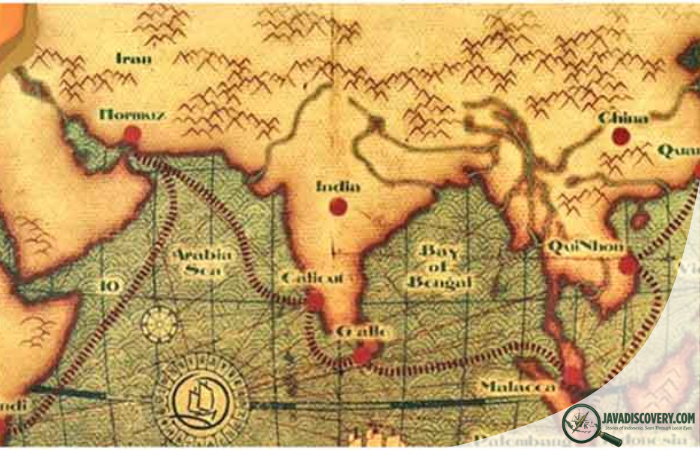
javadiscovery.com — For centuries, the popular narrative of global trade has been dominated by the dusty caravan trails of Central Asia. Yet, beneath the keel of ancient wooden vessels, a much more fluid and powerful story was being written in the warm waters of the Indonesian archipelago. Maritime Silk Road: Reclaiming Java’s Global History is a journey into the heart of a “spice-fueled” globalization that predates the European Age of Discovery by nearly a millennium. Java was never a silent bystander in world history; it was the “Great Wharf” where the scents of the Moluccas met the silks of China and the glass of the Roman Mediterranean. Reclaiming this history is not just about nostalgia; it is about repositioning Java as a sophisticated, cosmopolitan hub that shaped the tastes and economies of three continents. To explore the Maritime Silk Road: Reclaiming Java’s Global History is to understand that the “Java Sea” was once the most important highway on earth, a place where the exchange of ideas was as vital as the exchange of cloves. In the modern era, as Indonesia looks toward the sea once more, the lessons of this maritime past provide the blueprint for its global future.
The Spices of Life: Java as the Global Connector
The core of the Maritime Silk Road: Reclaiming Java’s Global History lies in two small, unassuming plants: the clove and the nutmeg. Native only to a handful of volcanic islands in the Maluku archipelago, these spices had to pass through Javanese ports to reach the rest of the world. By the 1st century AD, Javanese sailors—navigating by the stars and the “breath” of the monsoons—were already established in the markets of Southern China and the ports of India.
Reclaiming this history means recognizing the technological prowess of the “Jong”—the massive Javanese sailing ships that dwarfed anything the Europeans were building at the time. In the framework of Maritime Silk Road: Reclaiming Java’s Global History, these vessels were the heavy-lift trucks of the ancient world. They didn’t just carry cargo; they carried the “Java brand,” establishing a reputation for maritime expertise that allowed Javanese kingdoms like Sriwijaya and Majapahit to act as the ultimate middlemen between East and West.

The Belitung Shipwreck: Physical Proof of Connectivity
In 1998, the discovery of a 9th-century Arab dhow off the coast of Belitung Island provided the “smoking gun” for Maritime Silk Road: Reclaiming Java’s Global History. The ship was packed with over 60,000 pieces of Tang Dynasty ceramics, gold, and silver. Its presence in the Java Sea proves that a direct, high-volume trade route existed between the Abbasid Caliphate in Baghdad and the Tang Empire in China, with the Indonesian archipelago as the essential “refueling station.”
This shipwreck transformed our understanding of Maritime Silk Road: Reclaiming Java’s Global History. It showed that Java was not just a destination but a pivot point. The artisans of Java were influenced by these global designs, and in turn, Javanese aesthetics began to filter back along the trade routes. Reclaiming this history allows us to see Java as a 9th-century “Silicon Valley” of trade, a place where different cultures merged to create a new, hybrid maritime civilization.
“Java was the Mediterranean of the East. It was the place where every language was spoken and every god was worshipped, all for the sake of a single sack of nutmeg.” — Dr. Agus Aris Munandar, Archaeologist.
Spiritual Exchange: Buddhism and Hinduism on the Waves
Maritime Silk Road: Reclaiming Java’s Global History is not just a story of commerce; it is a story of the spirit. The great monuments of Borobudur and Prambanan were not built in isolation. They were funded by the wealth of the maritime trade and influenced by the constant flow of pilgrims and scholars traveling between India and China. Java became a global center for Buddhist learning, attracting famous monks like I-Tsing, who stayed in the region to translate sacred texts.
In the context of Maritime Silk Road: Reclaiming Java’s Global History, the sea was the medium through which “Dharma” and “Samsara” traveled. This religious pluralism became a hallmark of Javanese identity. Reclaiming this history helps modern Indonesians understand that their culture of “Bhinneka Tunggal Ika” (Unity in Diversity) was forged in the melting pot of international trade. The sea didn’t just bring gold; it brought the “Javanese Renaissance,” a flowering of art and philosophy that remains a source of national pride.
The Arrival of Islam: The Sufi Sailors
The spread of Islam across the archipelago is perhaps the most significant chapter in Maritime Silk Road: Reclaiming Java’s Global History. It did not arrive through conquest, but through the same maritime networks that carried spices. Muslim traders from Gujarat, Persia, and Yemen settled in the coastal “Pasisir” towns of Northern Java, marrying into local families and blending Islamic teachings with existing Javanese traditions.
This “Maritime Islam” was cosmopolitan, mystical, and deeply tied to the rhythms of the port. In Maritime Silk Road: Reclaiming Java’s Global History, we see that the Wali Songo (the Nine Saints) used the trade routes to spread their message, often using traditional arts like Wayang Kulit. Reclaiming this history reminds us that Indonesia’s status as the world’s most populous Muslim nation is a direct legacy of its maritime history—a faith that traveled on the wind and the waves rather than at the tip of a sword.
| Historical Era | Key Export/Impact | Global Connection |
|---|---|---|
| Early Kingdoms (1st-5th c.) | Spices & Forest Products | Roman and Han Dynasty markets. |
| Sriwijaya/Old Mataram (7th-10th c.) | Religious Scholarship & Gold | The Buddhist link between Nalanda (India) and China. |
| Majapahit Empire (13th-15th c.) | Naval Power & Rice | Diplomacy with the Yuan and Ming Dynasties. |
| Pasisir Sultanates (15th-17th c.) | Islam & Cosmopolitan Arts | The Indian Ocean trade network. |
The Colonial Erasure: Reclaiming the Narrative
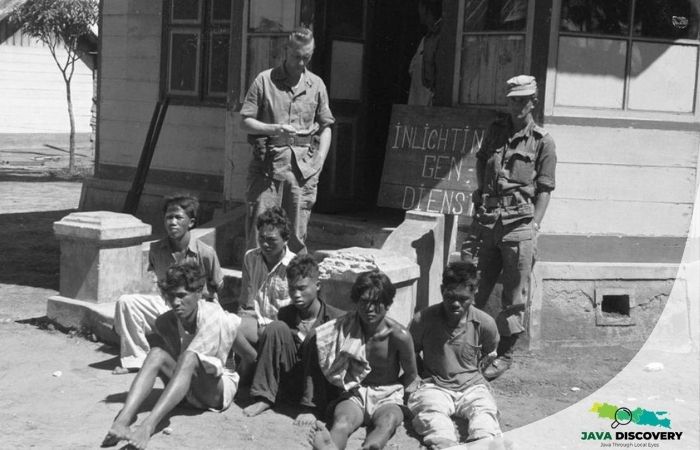
For 350 years, the narrative of the Maritime Silk Road: Reclaiming Java’s Global History was suppressed by European colonial powers. The Dutch East India Company (VOC) sought to monopolize the spice trade by force, effectively “fencing off” the archipelago and cutting the ancient ties between Java and its neighbors. History was rewritten to make Java appear as a passive resource rather than a global actor.
Reclaiming this history is a decolonial act. It means shifting the focus from “Europeans arriving in the East” to “Javanese navigating the World.” When we look at Maritime Silk Road: Reclaiming Java’s Global History, we see that the “monopoly” of the VOC was a brief, violent interruption in a much longer history of free-flowing, multicultural trade. Reclaiming the narrative allows modern Indonesia to speak from a position of historical strength, as a nation that has always been “open for business” on its own terms.
The New Maritime Fulcrum: A Return to the Sea
Today, the Maritime Silk Road: Reclaiming Java’s Global History is more relevant than ever. Indonesia’s vision to become the “Global Maritime Fulcrum” is essentially an effort to restart the engine of the ancient Maritime Silk Road. By building modern ports and “Tol Laut” (Sea Toll Roads), the government is attempting to reclaim Java’s position as a vital link in the global supply chain.
However, Maritime Silk Road: Reclaiming Java’s Global History teaches us that infrastructure alone is not enough. The ancient success of Java was built on “soft power”—cultural openness, religious tolerance, and diplomatic skill. For the modern “Silk Road” to succeed, Indonesia must again become a place where the world feels “at home.” Reclaiming history is the first step in building a future where the Java Sea is once again a bridge, not a barrier.
Conclusion: The Horizon Beckons
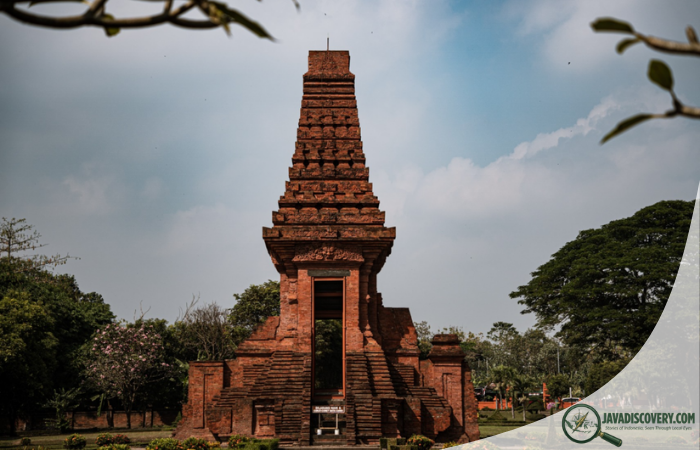
Maritime Silk Road: Reclaiming Java’s Global History reveals an Indonesia that is not on the periphery of the world, but at its very center. It is a story of bravery, innovation, and an unshakeable connection to the horizon. Java’s history is not just found in the dust of Trowulan or the stones of Borobudur; it is found in every wave that breaks against its shores.
By Reclaiming Java’s Global History, we honor the sailors who mastered the monsoons and the merchants who turned a handful of spices into a world-changing fortune. This history is the “Pusaka” (heirloom) of the Indonesian people, a reminder that they are the heirs to a maritime legacy that once defined the global age. As the sun sets over the Sunda Strait, the shadows of the ancient “Jong” ships seem to reappear on the water—a reminder that the road to the future is paved with the wisdom of the waves. The Maritime Silk Road is not a ghost; it is a living path, and Java is once again ready to lead the way.