How the Railway Created Modern Javanese Cities

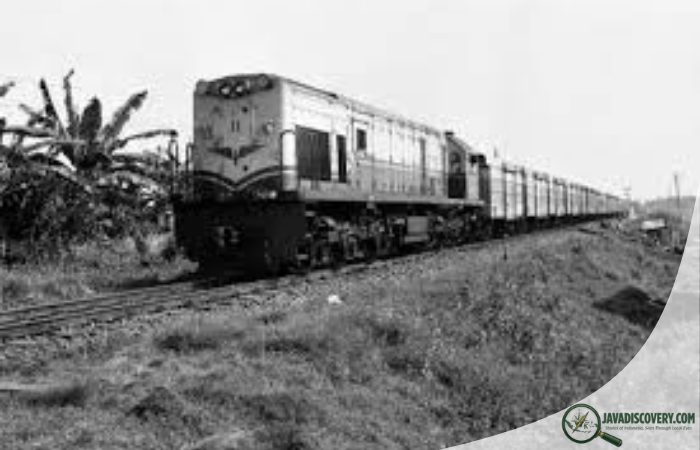
javadiscovery.com – At dawn in Semarang, the air still carries the scent of salt from the Java Sea. Fishermen return with their nets heavy and silent, while commuters gather beneath the iron canopy of an old station where the clock ticks with mechanical certainty. A whistle pierces the morning haze. Steel wheels begin to move. The rhythm feels ordinary now, almost invisible in its familiarity. Yet this rhythm once changed everything. The railway did not simply connect Javanese cities. It reorganized them, disciplined them, and quietly gave birth to the modern urban world that stretches across the island today.
The First Line Across a Changing Landscape
When the first railway line opened in 1867 between Semarang and Tanggung, the island was still shaped by rivers, dirt roads, and horse drawn carts. Travel between cities required patience and physical endurance. Goods moved at the pace of animals and tides. The railway introduced speed into a society accustomed to gradual movement. Steam engines cut through rice fields, across teak forests, and into royal cities whose rhythms had long been tied to court ceremonies and market days.
The arrival of rail altered geography itself. What had once been distant became accessible within hours. Plantation estates in the interior of Central and East Java suddenly found efficient routes to coastal ports. Sugar, coffee, tobacco, and indigo moved faster than ever before. The landscape began to orient itself toward the tracks.

Stations as New Urban Centers
Traditional Javanese cities were organized around the alun alun, the palace, and the mosque. The spatial philosophy reflected cosmic order. Power radiated from the kraton outward. With the railway came a new axis. The station emerged as a rival center of gravity.
In Yogyakarta, the stately Tugu Station rose not far from the old royal core. Its white facade and wide platforms introduced a different architectural language. European design met tropical light. Porters in batik sarongs carried luggage past cast iron columns. Vendors called out in Javanese and Malay. A traveler arriving by train experienced the city first not through its palace gates but through the geometry of rail infrastructure.
In Surabaya, East Java’s port capital, railway lines converged like veins feeding a restless heart. Warehouses clustered near sidings. Markets grew around station entrances. Hotels and administrative offices followed. The city expanded outward along rail corridors, reshaping its spatial logic.
The Discipline of Time
The railway did more than move bodies and cargo. It standardized time. Before trains, time was elastic. Village life followed the sun. Court rituals followed lunar calendars. Market days rotated according to Javanese cycles. The railway demanded precision. Timetables required synchronization across regions.
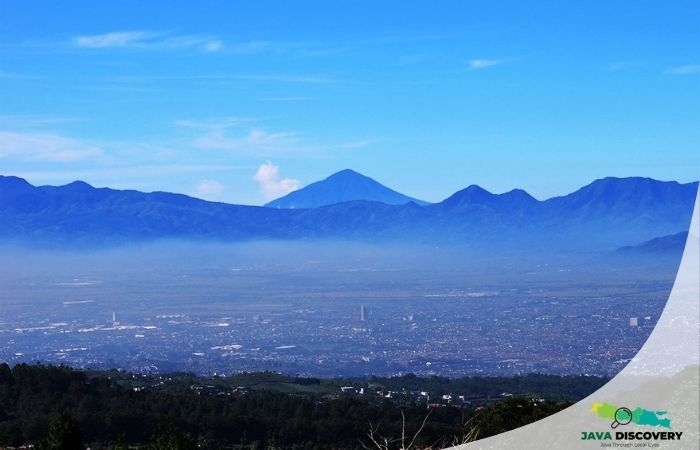
Clocks became public authorities. Stations displayed them prominently. Office hours aligned with departure schedules. The notion of punctuality gained urgency. In cities such as Bandung, once a quiet highland settlement surrounded by tea estates, this discipline of time contributed to its transformation into a modern administrative hub.
Urban life began to move according to the cadence of arrivals and departures. The whistle marked more than motion. It marked modernity.
Industrial Growth Along the Tracks
The colonial economy relied heavily on export crops, and railways became its arteries. In East Java, sugar mills multiplied near railway junctions. Towns such as Kediri and Malang expanded around these industrial complexes. Worker housing appeared in neat rows. Workshops, depots, and loading platforms formed new industrial districts.
The railway made large scale production viable. Farmers who once sold locally could now supply distant markets. This integration fostered economic growth but also deepened inequalities. European administrators lived in spacious quarters near well maintained avenues, while indigenous laborers occupied densely packed kampungs at the margins.
Yet even within this hierarchy, the railway blurred boundaries. Stations were spaces of encounter. Passengers from different ethnic and social backgrounds shared platforms, even if separated by ticket class. Chinese merchants transported goods between cities. Arab traders traveled to expanding commercial hubs. Javanese farmers ventured into urban centers seeking wage labor.
Migration and the Making of Urban Identity
Rail travel encouraged migration on an unprecedented scale. Young men left villages in Central Java to work in Surabaya’s docks or Bandung’s administrative offices. Students journeyed to new schools established in colonial cities. Religious teachers traveled between pesantren. Ideas moved as swiftly as cargo.
In the early twentieth century, trains became carriers of political thought. Newspapers printed in Batavia reached interior towns within days. Nationalist leaders traveled by rail to organize meetings across Java. The infrastructure built for economic extraction became an unintended channel for intellectual and political awakening.
The urban population diversified. Accents mixed. Culinary traditions blended. Markets offered foods once confined to specific regions. The railway stitched together cultural fragments into a more cohesive Javanese urban identity.
Architecture and the Modern Cityscape
Railway architecture left visible imprints on city aesthetics. Stations featured arched windows, decorative gables, and high ceilings designed for ventilation in humid climates. Signal towers and iron bridges added industrial silhouettes to tropical skylines.
In Bandung, rail connectivity accelerated urban planning efforts that would later earn the city its reputation as a colonial garden city. Broad boulevards connected administrative buildings to the station. Residential districts followed grid patterns rather than organic village layouts.
Similarly, in Semarang, the grand Tawang Station stood near the harbor, anchoring a commercial district that thrived on maritime and rail synergy. The port handled ships arriving from Singapore and beyond, while trains distributed goods inland. Together they formed a hybrid system of sea and steel.
Rural Transformation and Urban Expansion
Railways did not only change cities. They redefined rural landscapes. Small villages near new stops transformed into bustling market towns. Farmers gained access to broader markets. Agricultural cycles adapted to train schedules. Seasonal harvests aligned with freight capacity.
Urban expansion often followed tracks outward. Residential suburbs grew along commuter lines. Over time, what had once been separate settlements merged into continuous urban corridors. The boundaries between village and city blurred.
In Greater Jakarta, commuter trains later amplified this pattern, creating satellite towns that depend daily on rail connections. Though Jakarta’s metropolitan growth accelerated in the twentieth century, its foundations were laid by earlier rail expansion across the island.
Segregation and Social Hierarchies
Modernization carried contradictions. Railway compartments were divided by class. Europeans traveled first class, while indigenous passengers occupied lower tiers. Urban planning reinforced racial segregation. European quarters were often situated near main stations but physically separated from indigenous neighborhoods.
Yet the railway also democratized mobility in subtle ways. Affordable third class tickets allowed villagers to experience distant cities. The very act of boarding a train challenged older spatial hierarchies rooted in feudal order. Mobility offered glimpses of alternative futures.
Independence and National Ownership
When Indonesia declared independence in 1945, railway workers played a crucial role in securing infrastructure. Stations became strategic sites during the revolution. Control over tracks meant control over movement and communication.
After nationalization, the railway transformed from colonial enterprise into national asset. Its routes continued to shape development patterns. Industrial estates clustered near established lines. Urban planners built upon inherited corridors rather than starting anew.
The Railway Legacy in Contemporary Java
Today, trains glide past rice paddies framed by volcanic silhouettes. Commuters scroll through phones as landscapes blur beyond windows. The rhythm feels ordinary. Yet beneath the surface, modern Javanese cities still follow nineteenth century alignments.
Commercial districts remain anchored near historic stations. Industrial zones trace old freight routes. Housing developments rise along commuter corridors. Even the psychological perception of distance on the island is defined by rail travel times.
In many ways, the railway redefined what it meant to inhabit Java. It compressed geography, disciplined time, diversified society, and generated new forms of urban life. Cities once shaped by royal cosmology and maritime trade evolved into interconnected nodes within a continental scale network.
The Sound That Changed the Island
Listen closely at a platform during early morning departure. The low rumble builds beneath your feet. Air trembles. Doors close with metallic finality. A whistle cuts through humid air. The train pulls forward, carrying office workers, students, vendors, and travelers into another day.
This sound has echoed across Java for more than a century. It has accompanied revolutions, economic booms, political upheavals, and cultural shifts. It continues to structure daily routines in cities both large and small.
The railway did not erase older traditions. Instead, it layered modern systems atop ancient landscapes. Palaces still stand. Markets still bustle. Mosques still call the faithful to prayer. But between these enduring symbols runs a network of steel that silently reorganized the island.
Modern Javanese cities were not inevitable. They were engineered, measured in kilometers of track and minutes of schedule. They grew outward from stations, pulsed to the tempo of locomotives, and matured within corridors of commerce and migration.
At sunset, when trains return toward their depots and the sky burns orange above volcanic ridges, the rails gleam briefly before fading into shadow. They remain fixed in the earth, steady and unassuming. Yet through them, Java entered the modern age.