The Majapahit Empire Lessons for Modern Governance

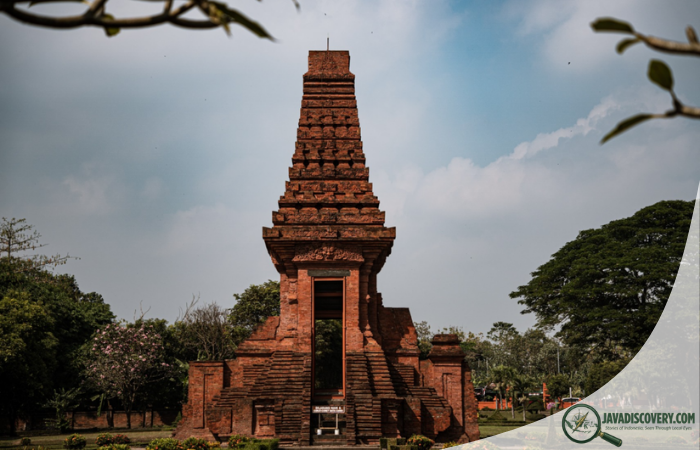
javadiscovery.com — Deep in the sun-drenched plains of Trowulan, East Java, the red-brick ruins of gateways and temples stand as silent witnesses to a time when Java was the beating heart of a maritime superpower. The Majapahit Empire (1293–c. 1527) was not just a kingdom; it was the first true blueprint of a unified Indonesia. Today, as the modern Republic navigates the complexities of the 21st century, the ghost of Trowulan offers more than just nostalgia. The Majapahit Empire: Lessons for Modern Governance provides a masterclass in how to manage a sprawling, multi-ethnic archipelago. From the visionary (if ruthless) diplomacy of Gajah Mada to the sophisticated religious pluralism of Hayam Wuruk’s court, Majapahit solved problems that Jakarta still grapples with today. To study The Majapahit Empire: Lessons for Modern Governance is to realize that the “Indonesian Way”—balancing regional autonomy with central authority—is a political technology perfected over seven hundred years ago. In an era of global shifts, looking back at the Majapahit “Mandala” system reveals that the secret to lasting power in the Nusantara lies not in absolute control, but in the art of the alliance.
The Palapa Oath: The Power of National Vision
At the center of The Majapahit Empire: Lessons for Modern Governance is the Sumpah Palapa (The Palapa Oath) sworn by the Prime Minister, Gajah Mada. He famously vowed not to taste the “palapa” (likely a reference to spices or worldly pleasures) until the entire Nusantara was unified. This was the birth of a “Grand Strategy.” Gajah Mada understood that a fragmented archipelago was vulnerable to external threats and internal stagnation.
For modern leaders, the lesson is clear: a nation needs a narrative that transcends local interests. Majapahit didn’t just conquer; it created a shared identity based on trade and mutual defense. In the framework of The Majapahit Empire: Lessons for Modern Governance, the Palapa Oath is the historical precursor to the Proklamasi of 1945. It teaches that without a unifying “Why,” a nation of islands will inevitably drift apart. Visionary governance requires a leader to sacrifice personal comfort for a collective horizon.

Bhinneka Tunggal Ika: Managing Pluralism
The national motto of modern Indonesia, Bhinneka Tunggal Ika (Unity in Diversity), actually originates from a Majapahit-era poem, Sutasoma, written by Mpu Tantular. During the 14th century, the empire successfully navigated a “Shiva-Buddha” synthesis, allowing Hindu and Buddhist traditions to flourish side-by-side without religious warfare. The Majapahit Empire: Lessons for Modern Governance shows that religious tolerance was not just a moral stance, but a pragmatic political tool.
By ensuring that the state did not favor one faith to the exclusion of others, Hayam Wuruk maintained social stability. In the context of The Majapahit Empire: Lessons for Modern Governance, this pluralism allowed the empire to attract international traders—from India, China, and the Arab world—creating a cosmopolitan economy. The lesson for today is that inclusion is the ultimate defense against radicalization and civil unrest. Diversity is a resource to be managed, not a problem to be solved.
“Majapahit didn’t demand that everyone become Javanese; they demanded that everyone become part of the system. That is the difference between a tyrant and an emperor.” — Dr. Baskoro, Historian.
The Mandala System: Decentralization and Autonomy
One of the most profound aspects of The Majapahit Empire: Lessons for Modern Governance is the “Mandala” model of power. Unlike the rigid, centralized bureaucracies of Europe, Majapahit operated as a series of concentric circles. The core was direct Javanese rule, but the outer “vassal” states in Sumatra, Kalimantan, and the Malay Peninsula enjoyed significant internal autonomy. They paid tribute and offered loyalty, but they kept their own kings and customs.
This mirrors the modern Indonesian challenge of Otonomi Daerah (Regional Autonomy). The Majapahit Empire: Lessons for Modern Governance suggests that in an archipelago, the “center” must be strong enough to inspire confidence but flexible enough to allow local regions to breathe. When Majapahit became too heavy-handed, rebellions sparked; when it stayed as a supportive “hub,” the empire prospered. This balance of “Soft Power” and “Strategic Presence” remains the gold standard for governing Indonesia’s 38 provinces.
Maritime Supremacy: The Global Maritime Fulcrum
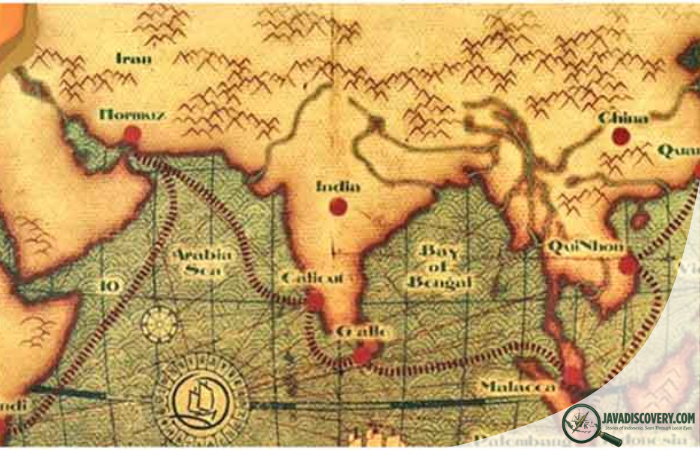
Majapahit was, above all, a thalassocracy—an empire of the sea. Its power was not built on land-based armies alone, but on a massive navy that controlled the “Silk Road of the Sea.” The Majapahit Empire: Lessons for Modern Governance highlights that for Indonesia, logistics *is* governance. By controlling the straits and the ports, Majapahit controlled the wealth of the East.
Modern Indonesia’s ambition to be a “Global Maritime Fulcrum” (Poros Maritim Dunia) is a direct echo of Majapahit’s naval doctrine. In The Majapahit Empire: Lessons for Modern Governance, we see that infrastructure—the “Tol Laut” of the 14th century—was the key to national security. An island nation that forgets its navy loses its sovereignty. Majapahit’s decline began when it turned its back on the sea and became embroiled in internal agrarian land disputes.
| Majapahit Strategy | Modern Equivalent | Key Lesson |
|---|---|---|
| Palapa Oath | Pancasila & NKRI | Leadership requires a unifying national vision. |
| Shiva-Buddha Synthesis | Interfaith Dialogue / Bhinneka Tunggal Ika | Pluralism is the foundation of social stability. |
| Mandala Tributary System | Otonomi Daerah (Regional Autonomy) | Decentralization prevents regional secession. |
| Jong & Navy Dominance | Global Maritime Fulcrum | Economic power depends on maritime security. |
The Bubat Tragedy: The Danger of Hubris
No study of The Majapahit Empire: Lessons for Modern Governance is complete without mentioning its failures. The Tragedy of Bubat—a diplomatic marriage between Majapahit and Sunda that turned into a massacre—remains a cautionary tale. Gajah Mada’s insistence on the absolute subordination of Sunda led to a bloodbath that created a centuries-long rift between the Javanese and Sundanese people.
This reveals the dark side of The Majapahit Empire: Lessons for Modern Governance: the danger of “Javanocentrism.” When the center becomes too arrogant and fails to respect the dignity of the “regions,” the fabric of the nation tears. Modern Indonesian governance must avoid the temptation of “Centralism” and recognize that respect is a more effective tool of union than force. Hubris in the palace leads to heartbreak in the provinces.
Succession and the Paregreg War: Institutional Continuity
Majapahit did not fall to a foreign invader; it rotted from within. The Paregreg War, a civil war over succession, shattered the empire’s unity and allowed the rising Islamic sultanates to gain ground. The Majapahit Empire: Lessons for Modern Governance teaches us about the absolute necessity of stable, institutionalized succession.
When power is tied to a single “Strongman” or a specific family dynasty without clear rules, the death of that leader creates a vacuum. In the context of The Majapahit Empire: Lessons for Modern Governance, the lesson for modern democracy is that institutions must be stronger than individuals. A peaceful transition of power is the highest achievement of any government; without it, even the greatest empire will eventually consume itself.
Conclusion: The Architecture of a Nation
The Majapahit Empire: Lessons for Modern Governance shows us that Indonesia is not a “new” invention of the 20th century, but a restoration of an ancient architecture. The pillars of that architecture—vision, pluralism, autonomy, and maritime strength—are as relevant in the age of AI and high-speed rail as they were in the age of wooden ships and terracotta pipes.
As we look at the ruins of Trowulan, we don’t see a dead past; we see a mirror. The Majapahit Empire: Lessons for Modern Governance reminds us that governing this archipelago is an act of constant “weaving.” It requires the strength of Gajah Mada, the wisdom of Hayam Wuruk, and the inclusive spirit of Mpu Tantular. By learning these lessons, modern Indonesia can avoid the pitfalls of the past and build a “Majapahit Baru” (New Majapahit)—a nation that is not just a geographic entity, but a spiritual and economic powerhouse that lights the way for the rest of the world. The stones of Trowulan have spoken; it is up to us to listen.