Hills as Social Dividers in Rural Javanese Communities

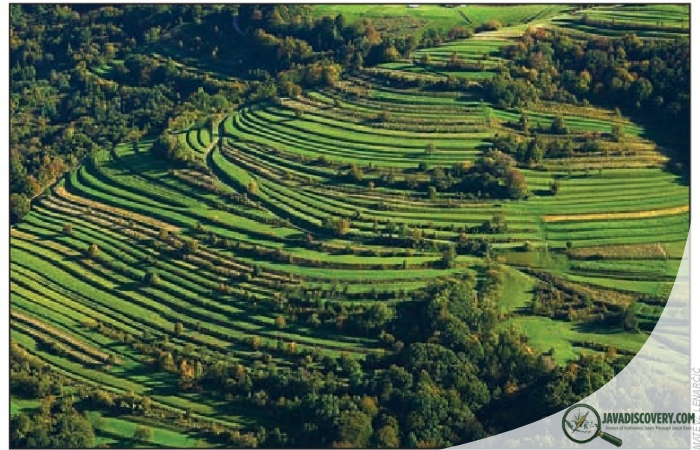
javadiscovery.com – In many parts of rural Java, a hill is more than a rise in the land. It is a quiet line that separates lives. From a distance, the slopes appear gentle, covered in layered green, blending seamlessly into the surrounding landscape. But for those who live on either side, the hill can define movement, shape relationships, and influence how communities understand themselves.
Paths wind slowly upward, narrowing as they climb, then descend into another valley where the rhythm of life may feel subtly different. The distance is not always far, yet the experience of crossing can carry meaning. A shift in dialect, in farming practice, in social connection. The hill stands between, not as a barrier that cannot be crossed, but as one that must be acknowledged.
In Java, where geography and society are closely intertwined, hills often function as natural dividers that extend beyond the physical into the social world.

Geography as Structure
Rural settlements in Java are often shaped by the contours of the land. Valleys, rivers, and hills influence where people build homes, cultivate fields, and establish pathways.
Hills, in particular, create distinct zones. One side may face the sun differently, receive different levels of rainfall, or have access to different soil types.
These variations affect agricultural patterns, leading communities on either side to develop slightly different practices.
Over time, these differences accumulate, contributing to distinct local identities.
Access and Isolation
Movement across hills requires effort. Paths may be steep, uneven, and affected by weather conditions.
During the rainy season, trails can become slippery, making travel more difficult. In such conditions, even short distances feel longer.
This physical challenge can limit frequent interaction, especially for older residents or those without access to transportation.
As a result, communities separated by hills may interact less often than those connected by flat terrain.
Formation of Social Boundaries
When interaction is limited, differences become more pronounced. Communities develop their own routines, social networks, and patterns of cooperation.
These distinctions are not necessarily intentional. They emerge gradually, shaped by geography and daily experience.
People begin to identify more strongly with those on their side of the hill, reinforcing a sense of belonging.
The hill becomes a reference point, a marker of where one community ends and another begins.
Variations in Culture and Practice
Across a hill, subtle variations can be observed. These may include differences in dialect, in the timing of agricultural activities, or in local customs.
Such variations are not always immediately visible, but they become apparent through interaction.
Festivals, rituals, and communal practices may also differ, reflecting localized interpretations of broader cultural traditions.
These differences contribute to the richness of rural life, even as they highlight divisions.
Economic Implications
Hills can influence access to markets, resources, and infrastructure. Communities on one side may be closer to roads or trading centers, while those on the other may be more remote.
This uneven access can shape economic opportunities, affecting income, crop choices, and availability of goods.
Over time, such differences can deepen the sense of separation between communities.
Geography, in this way, interacts with economic conditions to reinforce social divisions.
Bridges Across the Divide
Despite these divisions, hills do not create complete isolation. Paths, both physical and social, connect communities.
Markets, schools, and shared events bring people together, creating opportunities for interaction.
Marriage and family ties often extend across hills, linking communities through personal relationships.
These connections soften the dividing effect of geography, creating a network that spans the landscape.
Perception and Identity
The presence of a hill influences how people perceive distance and difference. A neighboring village on the other side may feel farther away than one at a similar distance on flat ground.
This perception shapes mental maps of the environment, affecting how communities relate to one another.
Identity becomes tied not only to location but to the experience of movement across terrain.
Environmental Influence
Hills also create micro-environments. Differences in elevation and orientation affect temperature, moisture, and vegetation.
These environmental variations contribute to the diversity of agricultural practices and local ecosystems.
Communities adapt to these conditions, developing knowledge specific to their side of the hill.
This adaptation reinforces the connection between geography and social structure.
Modern Changes and Connectivity
Infrastructure development is gradually altering the role of hills as social dividers. Roads, bridges, and transportation options reduce the difficulty of movement.
As access improves, interaction between communities increases. Differences may become less pronounced, or take new forms.
However, the influence of geography does not disappear entirely. It continues to shape patterns of settlement and perception.
A Landscape of Subtle Division
Standing at the top of a hill, it is possible to see both sides at once. Fields extend in different directions, villages nestled in separate valleys, each with its own rhythm.
The distance between them may seem small, yet the hill has played a role in shaping their histories.
In rural Java, such features are not merely physical. They are part of how communities are formed and understood.
The hill does not enforce division through force. It does so through presence, through the quiet influence of terrain on daily life.
Between Separation and Connection
Ultimately, hills in Javanese landscapes represent both separation and connection. They create distinctions, yet they also invite crossing.
Paths that wind over their slopes become routes of interaction, carrying people, goods, and ideas.
Through these movements, communities remain linked, even as they maintain their differences.
In this balance, the hill stands not only as a divider, but as a reminder of how geography shapes human experience in ways that are subtle, persistent, and deeply embedded in the fabric of rural life.