Language Archaeology Migration Patterns in Javanese History

javadiscovery.com — While stone temples and rusted coins provide tangible clues to the past, the most resilient archive of human movement is the very air we breathe through speech. Language Archaeology Migration Patterns in Javanese is a field that peels back the layers of the Javanese tongue to reveal a story of epic sea voyages, shifting trade winds, and the blending of distant civilizations. The words spoken today in the markets of Solo or the fishing villages of Pantura are linguistic fossils. By tracing the etymology of everyday terms, researchers can map the waves of Austronesian settlers, Indian scholars, Arab traders, and European colonizers who made Java their home. To study Language Archaeology Migration Patterns in Javanese is to realize that the language is not a static monolith but a living map of the Nusantara. It proves that the Javanese people have always been a “bridge” culture, absorbing the world while maintaining a unique grammatical core that has survived for over a thousand years.
The Austronesian Root The First Wave
The foundation of Language Archaeology Migration Patterns in Javanese begins with the great Austronesian expansion. Thousands of years ago, seafaring groups migrated from Taiwan through the Philippines and into the Indonesian archipelago. We know this because the core vocabulary for life-sustaining concepts—such as banyu (water), manuk (bird), and watu (stone)—shares a common DNA with languages as far away as Madagascar and Easter Island.
In the framework of Language Archaeology Migration Patterns in Javanese, these words are the primary layer. They represent the migration of the first farmers and sailors who brought rice cultivation and maritime technology to Java. When a Javanese speaker says mata for eye, they are speaking a word that has traveled across the Pacific and Indian Oceans, serving as a linguistic heartbeat that connects the archipelago to a vast prehistoric network.

The Sanskrit Influx Intellectual Migration
Around the first millennium, Language Archaeology Migration Patterns in Javanese took a sophisticated turn with the arrival of Indian culture. This was not a migration of masses, but a migration of ideas, religion, and administration. Sanskrit words flooded into Old Javanese (Kawi), providing the vocabulary for philosophy, law, and high art. Terms like negara (state), raja (king), and aksara (letter) transformed the language.
This layer of Language Archaeology Migration Patterns in Javanese reveals the birth of the Javanese courts. It shows a society that was rapidly organizing into complex states. Interestingly, Javanese didnt just adopt these words; it adapted them. The migration of Sanskrit into Java created a unique hybrid that allowed for the writing of great epics like the Arjunawiwaha. This era proves that Java was an intellectual hub, capable of absorbing a foreign classical language and weaving it into the local fabric.
Language is the only road map that doesn’t get erased by the rain. In Javanese, you can hear the waves of the Pacific and the chants of the Ganges if you listen closely enough. — Ki Bagus Sugito, Linguist
The Arabic and Persian Layer Trade and Faith
As the maritime silk road flourished, Language Archaeology Migration Patterns in Javanese recorded the arrival of Islam. This migration pattern brought a new set of loanwords related to commerce, science, and spirituality. Words like kabar (news), pasar (market), and donga (prayer) entered the Javanese lexicon through the coastal ports.
By analyzing Language Archaeology Migration Patterns in Javanese from this period, we see a shift from the vertical hierarchy of Sanskrit toward the communal and commercial language of the Middle East. It tracks the migration of the Sufi saints and the merchant classes who settled in northern Java. The language became a tool for a globalized trade network, connecting a farmer in the Javanese interior to the markets of the Red Sea through a shared vocabulary of faith and finance.
European Colonialism The Linguistic Scars
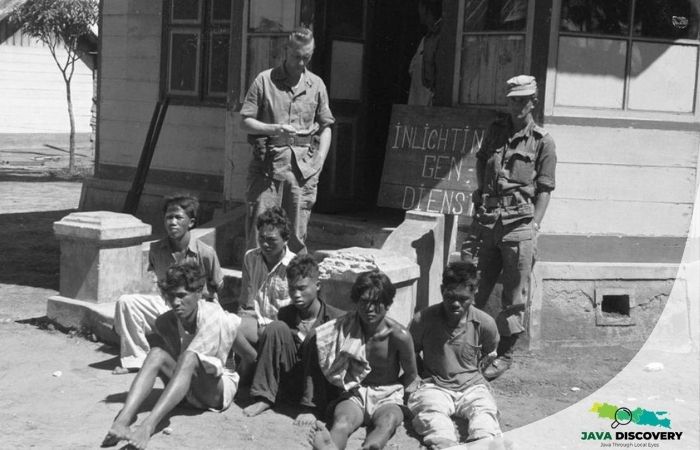
The most recent significant layer in Language Archaeology Migration Patterns in Javanese comes from the Dutch and Portuguese. This migration brought the vocabulary of modern technology, Western law, and everyday household items. When Javanese people use words like buku (book), sepur (train), or kantor (office), they are using Dutch remnants.
In the study of Language Archaeology Migration Patterns in Javanese, these loanwords act as markers of the colonial encounter. They represent a period where Javanese life was forcibly integrated into a European administrative machine. However, the Javanese language remained resilient. It swallowed these foreign terms, often changing their pronunciation and meaning to fit the local tongue, proving that while the government was colonized, the language remained a sovereign territory.
| Linguistic Layer | Origin Group | Key Example Words |
|---|---|---|
| Austronesian | Prehistoric Migrants | Srengenge (Sun), Watu (Stone) |
| Sanskrit | Indian Scholars/Priests | Budi (Wisdom), Surya (Sun) |
| Arabic/Persian | Muslim Traders/Saints | Majelis (Assembly), Akal (Mind) |
| Dutch/Portuguese | Colonial Administrators | Duit (Money), Kaca (Glass) |
Social Stratification A Migration of Status
A unique aspect of Language Archaeology Migration Patterns in Javanese is the internal migration of status through the development of speech levels like Ngoko and Krama. As the Javanese sultanates became more centralized and sophisticated, the language migrated away from a flat, egalitarian structure toward a complex system of social navigation.
This internal Language Archaeology Migration Patterns in Javanese shows how the movement of power within the island shaped the way people spoke to one another. It was a migration of the spirit, where the language itself became a map of one’s place in the cosmic and social order. To speak high Krama is to perform a linguistic migration into the refined world of the palace, a tradition that survives even in modern, democratic Indonesia.
Conclusion The Living Museum of Speech
Language Archaeology Migration Patterns in Javanese teaches us that no culture is an island, even on an island. The Javanese language is a magnificent, multi-story building where each floor represents a different era of migration and encounter. It is a testament to the Javanese capacity for synthesis—taking what is foreign and making it intimately their own.
As we listen to the Javanese of the 21st century, we are hearing the echoes of ancient sailors, Hindu priests, Arab merchants, and Dutch officers. Language Archaeology Migration Patterns in Javanese is the ultimate proof of the Nusantara’s global history. It reminds us that our words are the footprints of our ancestors, and as long as the Javanese language is spoken, the story of these great migrations will never be forgotten. Every sentence is a journey; every word is a destination. The archaeology of language is the archaeology of our shared human soul.