Why Certain Colors Are Avoided in Javanese Ritual Contexts

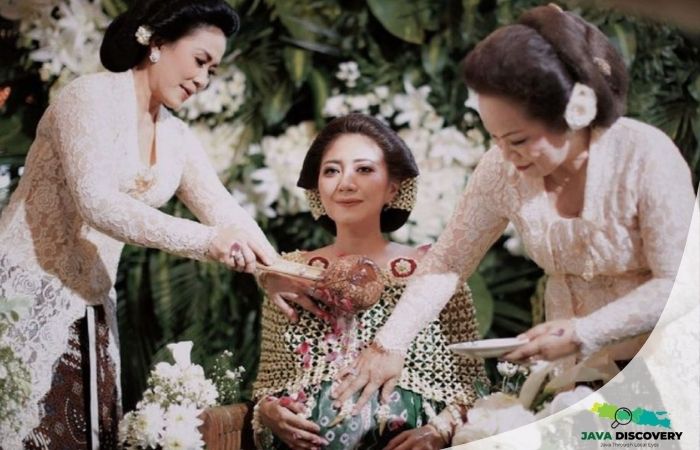
javadiscovery.com – In a quiet preparation before a small gathering, fabrics are carefully selected and arranged. Among the many choices available, some colors are set aside without discussion. No one explains the decision directly, yet it is understood. The selection is not based on preference alone, but on a shared awareness of what is appropriate for the moment.
In Javanese culture, color carries meaning that extends beyond visual appearance. Within ritual contexts, certain colors are chosen with care, while others are avoided. These choices reflect layers of symbolism, cultural memory, and sensitivity to balance. The absence of a color can be as meaningful as its presence.
Color becomes a language of context.

Color as Symbolic Expression
Colors in Javanese tradition are often associated with particular meanings, emotions, or states of being. In ritual settings, these associations guide selection.
Each color carries significance.
Meaning is culturally shaped.
Interpretation depends on context.
Color communicates without words.
Context Determines Appropriateness
The suitability of a color depends on the nature of the ritual. What is appropriate in one setting may be avoided in another.
Situations vary.
Meanings shift.
Choices reflect awareness.
Context guides decision.
Avoidance as Respect
Avoiding certain colors is not a restriction, but an expression of respect. It reflects an understanding of what aligns with the purpose of the ritual.
Restraint shows awareness.
Absence carries intention.
Choices reflect sensitivity.
Respect shapes selection.
Balance and Harmony
Javanese cultural values emphasize balance. Color selection contributes to maintaining harmony within a ritual environment.
Elements are considered together.
Contrast is moderated.
Harmony is prioritized.
Balance guides aesthetics.
Associations with Emotion and State
Certain colors may be associated with specific emotional tones or states that do not align with the purpose of a ritual.
Colors evoke feeling.
Associations influence choice.
Mismatch is avoided.
Alignment is maintained.
Historical and Cultural Memory
Over time, cultural experiences shape how colors are perceived. These associations are carried forward, even when their origins are not explicitly recalled.
Memory informs meaning.
Tradition reinforces practice.
Origins may be unclear.
Usage remains consistent.
Subtle Guidance Rather Than Rules
The avoidance of certain colors is rarely enforced through formal rules. Instead, it is guided by shared understanding.
Knowledge is implicit.
Behavior aligns naturally.
Correction is gentle.
Practice is sustained quietly.
Learning Through Observation
Individuals learn appropriate color use by observing others in ritual settings. Over time, they internalize these patterns.
Observation builds awareness.
Repetition reinforces choice.
Understanding develops gradually.
Knowledge becomes intuitive.
Adaptation in Modern Contexts
In contemporary settings, interpretations of color may evolve. However, sensitivity to appropriateness often remains.
Meanings shift.
Practices adapt.
Awareness persists.
Continuity remains in change.
The Meaning of Absence
When a color is not present, its absence contributes to the overall meaning of the ritual. What is left out shapes what is experienced.
Absence creates emphasis.
Selection defines space.
Meaning emerges through choice.
Silence can be expressive.
A Quiet Language of Color
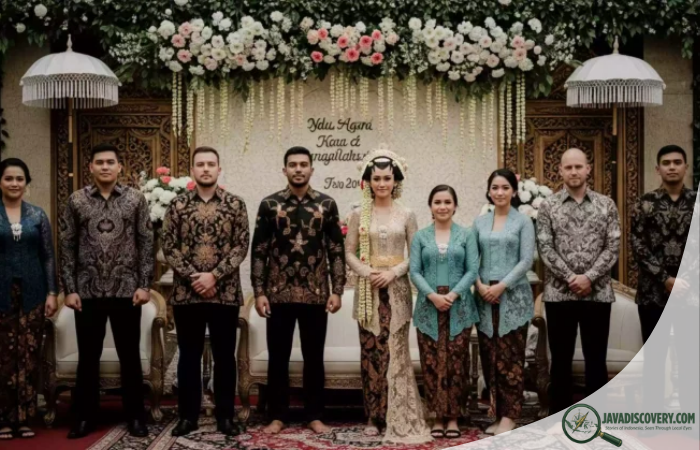
As the fabrics are arranged and the gathering begins, no one comments on the colors that were not chosen. Yet their absence supports the atmosphere, aligning with the purpose of the moment.
In Javanese ritual contexts, color is not only about what is seen, but about what is understood. Through careful selection and thoughtful avoidance, a subtle language is maintained, shaping how rituals are experienced.
Within this quiet practice, meaning is preserved, not through explanation, but through shared awareness of what belongs and what does not.