The Hidden Eroticism in Javanese Poetry and Temple Art

javadiscovery.com – In Javanese culture, love has always been more than emotion—it is art, ritual, and cosmic rhythm. But unlike the direct passion of Western romance, Javanese expressions of desire live in whispers and metaphors. A flower blooming, a cloud veiling the moon, or a drop of morning dew on a rice leaf—these images speak of longing and union. Eroticism in Java was never loud; it was sacred, poetic, and deeply human.
Desire in Disguise
Javanese literature rarely names the body. Instead, it surrounds it with symbols. The erotic becomes an allegory of life and balance. To say “the flower opens to the sun” is to hint at feminine awakening. To describe “the breeze caressing the fields” is to invoke a tender encounter. Behind these soft words, ancient poets spoke of the union between man and woman, soul and nature, heaven and earth.
“Eroticism in Javanese writing is the art of concealment,” says linguist Endah Pratiwi. “The more hidden it is, the deeper its resonance. A single metaphor can hold an entire universe of feeling.”

The Language of Longing in Tembang
In classical tembang macapat, each song form carries a mood—joy, sorrow, longing, devotion. The Asmaradana meter, whose name comes from asmara (love), is traditionally used for poems of affection and separation. Its verses often speak in nature’s language:
Lintang nyawang mega lir angling,
kembang wus mekar mrih katresnan,
tirta wening amemang rasa,
tan ana tembung, nanging ana sepi.
(The stars gaze upon the drifting clouds,
the flower has opened seeking affection,
pure water mirrors feeling,
no words, only silence.)
In these lines, eroticism lies not in description, but in atmosphere. The blooming flower represents awakening desire; the clear water, purity of emotion. The silence after union is not emptiness—it is sacred stillness, a pause between breaths of the cosmos.
For centuries, Javanese singers and poets performed such verses as moral and emotional education. Desire was taught not as indulgence but as discipline—something to be understood, honored, and guided toward harmony.
Panji Tales: Love as Pilgrimage
Among Java’s oldest and most beloved stories are the Panji tales, originating in the 14th century Kediri and Majapahit courts. The hero, Raden Panji, and his beloved Dewi Sekartaji (also known as Galuh Candra Kirana) are separated by fate, disguised, and reunited after long trials. Their journey symbolizes not just romantic devotion but the soul’s search for divine union.
When Panji and Sekartaji finally meet, the narrative lingers on gestures—the touching of hands, the gaze of recognition, the trembling of hearts. These scenes are charged with sensual energy, yet never explicit. The erotic becomes metaphysical, representing the merging of opposites: male and female, seeker and truth, body and spirit.
“The Panji stories teach us that love is both path and prayer,” explains literary historian Prof. Purnomo Soekarno. “To find the beloved is to find oneself.”
Erotic Reliefs and Sacred Imagery
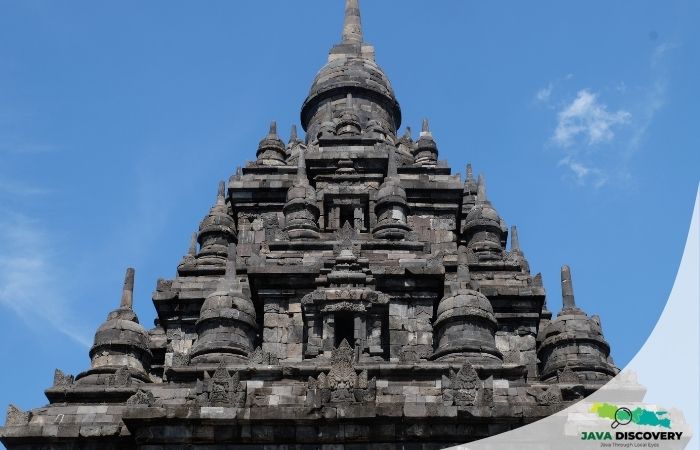
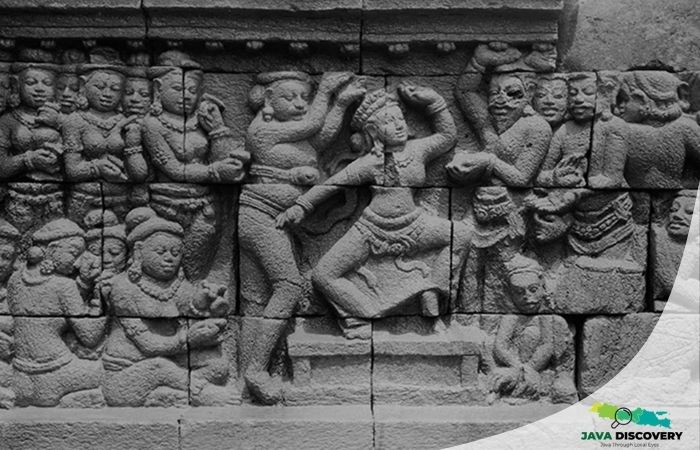
While the poets spoke in metaphor, the sculptors of Java expressed the same truths in stone. On the slopes of Mount Lawu, the 15th-century temples of Sukuh and Cetho stand as witnesses to Java’s most daring visual language. Visitors find carvings of men and women embracing, of the lingga and yoni united in perfect symmetry. To the untrained eye, these appear erotic; to the Javanese mystic, they are cosmic diagrams of creation.
Archaeologist Soeroso describes Sukuh as “a temple of transformation.” Its imagery, he explains, marks the transition between human desire and divine realization. “The physical act of union becomes a symbol for spiritual awakening. The body becomes a temple; passion becomes prayer.”
At Candi Cetho, a stone staircase leads upward between rows of fertility symbols, culminating in a square sanctum where offerings are still made today. Local farmers see the site not as scandal but as blessing—each planting season, they ask the mountain spirits for fertility and harmony. For them, erotic art is not shameful; it is gratitude carved in stone.
Erotic Proverbs and Folk Symbolism
Beyond temples and palaces, the people of Java also spoke of love in whispers and proverbs. In rural conversations, one might hear the phrase yen wis wayahe pari ngidul—“when the rice tilts southward,” a gentle euphemism for physical readiness. Another saying, wit gedhang wis metok (“the banana tree has blossomed”), refers to a girl entering womanhood. These expressions reveal a culture where sensuality was integrated into the rhythm of nature, not isolated by shame.
Even lullabies carried traces of longing and tenderness. The famous cradle song Gundul-Gundul Pacul, though often sung for children, encodes adult meanings about humility, balance, and the perils of desire untamed. In Javanese philosophy, the same energy that moves a lover’s heart moves the seasons, the rain, and the cycle of birth.
Between the Spiritual and the Sensual
The line between spiritual and sensual was never rigid in Java—it was porous, fluid, and alive. In the esoteric teachings of kejawen, bodily union mirrors the union of manunggaling kawula Gusti—the merging of human and divine. Control of desire was not repression but refinement; pleasure was a form of meditation when aligned with sincerity and respect.
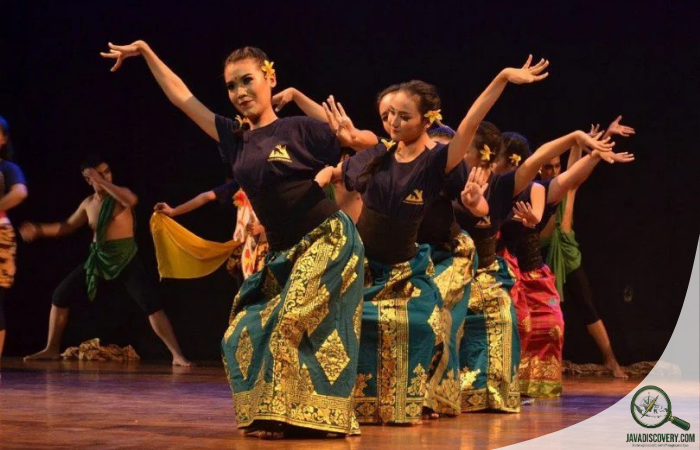
Traditional Javanese dancers, especially in bedhaya performances, embody this philosophy. Every gesture—slow, deliberate, sensuous—is a meditation on balance. The eyes glance softly, the fingers bloom like petals, and the space between movements speaks of restraint. As one dancer explained, “Our dance is erotic not because of skin, but because of feeling. It is longing held within grace.”
From Temple Walls to Modern Pages
Today, Javanese artists and writers continue to reinterpret this legacy. Poets like Sapardi Djoko Damono and Goenawan Mohamad often weave the old metaphors of rain, wind, and flowers into contemporary verse about love and distance. Modern sculptors echo the lingga-yoni form as statements of gender balance and creative energy. The erotic remains—not as provocation, but as memory.
Yet the public perception of such symbolism has changed. What was once seen as sacred harmony is now often misunderstood as indecency. “We are strangers to our own heritage,” laments art historian Dewi Arum. “We forget that our ancestors saw no contradiction between beauty, desire, and devotion.”
Echoes of an Ancient Language
In the end, the erotic in Javanese art and poetry is not about sex, but connection. It reminds us that love is a universal language—sometimes spoken, sometimes carved, sometimes sung. The flower still blooms, the cloud still veils the moon, and in their meeting lies the same secret our ancestors once knew: that longing, when honored, becomes sacred.