Life Along the Bengawan Solo River Today

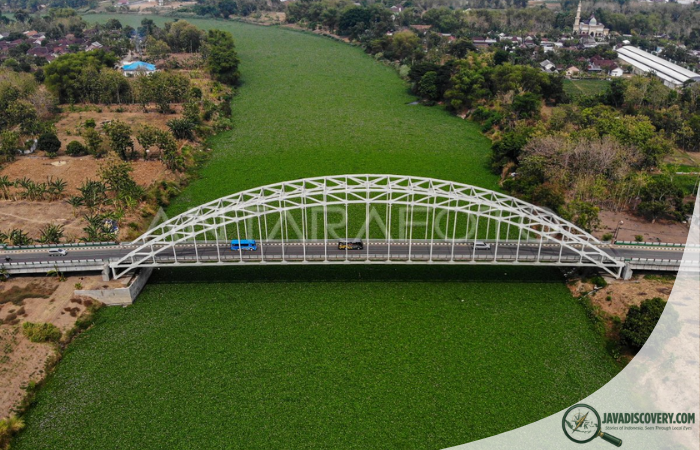
javadiscovery.com – At dawn, a thin veil of mist hovers above the Bengawan Solo, softening the river’s wide brown surface into something almost silver. The first light of morning touches the water gently, revealing slow ripples that carry leaves, driftwood, and the reflections of stilted houses along its banks. Roosters call from kampung courtyards, fishing boats nudge against bamboo moorings, and the scent of damp earth rises as women sweep the packed soil in front of their homes. The river moves steadily eastward, as it has for centuries, binding together fields, villages, and cities in a long, quiet conversation.
The Longest River in Java
Stretching more than five hundred kilometers from the highlands of Central Java to the Java Sea near Gresik, the Bengawan Solo is the island’s longest river. It begins in the volcanic slopes south of Surakarta and winds through fertile plains, industrial corridors, teak forests, and low coastal wetlands before meeting the sea. For generations, it has shaped the rhythm of life along its banks, nourishing rice paddies, inspiring folklore, and sometimes testing human resilience with seasonal floods.
To speak of the Bengawan Solo is to speak of continuity. Ancient Javanese kingdoms flourished along its waters. Traders once transported rice, sugar, and teak downstream in wooden barges. Colonial engineers built levees and canals to tame its floods. Today, concrete embankments rise in certain stretches, and bridges span its width in growing cities. Yet in many places, the river remains intimate and human in scale, edged by banana trees and bamboo groves that lean over the current.

Dawn in the River Villages
In a village near Bojonegoro, Pak Sutrisno prepares his narrow wooden boat before sunrise. The hull bears the marks of years of use, its paint faded by sun and rain. He pushes off with a bamboo pole, letting the current guide him toward a favored fishing spot where the water deepens and slows.
“The river tells you when to cast your net,” he says, his voice low and steady. “When the surface is calm but the current is strong below, that is when the fish gather.”
His hands move with practiced ease, casting a circular net that blooms in the air before settling into the water. Around him, the riverbank wakes gradually. Children in white and red school uniforms walk along narrow paths, their sandals slapping against damp soil. A motorbike engine hums in the distance. From a small mosque, the last notes of the dawn prayer linger in the humid air.
Fishing remains a livelihood for many families along the Bengawan Solo, though the catches are smaller than in decades past. Catfish, tilapia, and freshwater prawns still inhabit the river, but changes in water quality and sedimentation have altered their patterns. Some fishermen supplement their income by working in nearby factories or tending small rice fields during planting season.
Rice Fields and Irrigation Canals
Further upstream, near Sragen, the river’s water feeds a network of irrigation canals that spread like veins across the countryside. These canals transform dry soil into luminous green paddies during the rainy season. The scent of young rice plants mingles with the smell of wet mud, and dragonflies hover just above the water’s surface.
Ibu Sri, a farmer in her early forties, stands knee deep in a paddy as she presses seedlings into the soft earth. Her conical hat casts a shadow over her face.
“Without the river, there is no harvest,” she explains. “We depend on its timing. If the rains are late or the floods are too strong, everything changes.”
The monsoon determines much of the agricultural calendar. When heavy rains fall in the upstream mountains, the Bengawan Solo swells, sometimes breaching its banks and submerging fields. In recent years, extreme weather has made these cycles less predictable. Farmers speak of sudden floods that arrive at night and linger longer than before, forcing them to replant or accept reduced yields.
Yet the river also brings renewal. Floodwaters deposit nutrient rich sediment across the plains, replenishing soils that have supported rice cultivation for centuries. After the water recedes, farmers repair embankments, relevel their fields, and begin again.
Urban Crossings in Surakarta
In Surakarta, often called Solo, the river flows beneath broad bridges that connect bustling neighborhoods. Street vendors set up carts near the embankments in the late afternoon, selling fried tempeh, skewered satay, and cups of sweet tea. Teenagers gather along the riverfront to watch the sunset, their laughter mixing with the rumble of traffic.
Here, the Bengawan Solo is both backdrop and artery. Urban development has reshaped parts of its banks, replacing informal settlements with reinforced levees and landscaped promenades. Government projects aim to reduce flood risk while providing public space. Concrete steps descend to the water in certain sections, allowing residents to approach the river safely.
Yet challenges remain. During heavy rains, the water level can rise dramatically, pressing against embankments and testing the city’s drainage systems. Community volunteers monitor water gauges and coordinate with local authorities when alerts are issued. Flood preparedness has become part of urban life, woven into conversations at neighborhood meetings and family gatherings.
Memories of the Great Floods
Older residents along the Bengawan Solo recall major floods that reshaped entire districts. In Bojonegoro and Lamongan, stories circulate of water reaching the rooftops, of livestock carried away by swift currents, of families seeking shelter in mosques and schools built on higher ground.
Pak Kardi, a retired schoolteacher, remembers a flood from his childhood.
“The river was like a sea,” he says. “We moved our belongings to the attic. Boats came down the main road because the water covered everything.”
Such memories carry both fear and respect. The Bengawan Solo is not viewed solely as a threat but as a force of nature that demands understanding. Villagers build houses on slightly raised foundations. Some plant bamboo and vetiver grass along the banks to stabilize soil. Others participate in community based river cleanups, removing plastic waste that accumulates after storms.
Industry and Environmental Pressures
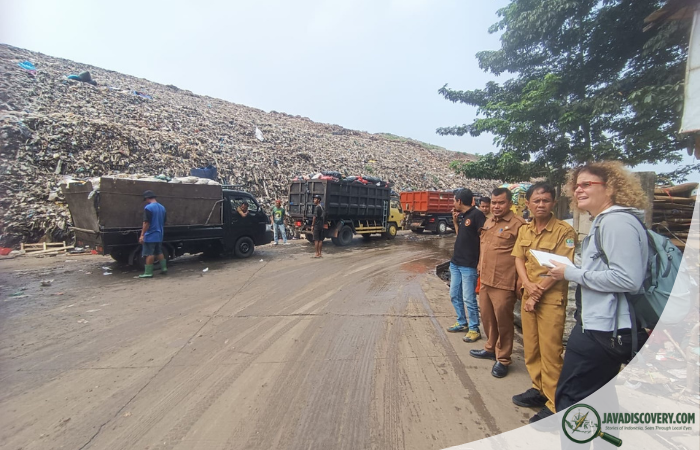
As the river approaches East Java, it passes through industrial zones where factories line its banks. The water here appears darker, and a faint chemical scent sometimes lingers in the air. Environmental groups have documented concerns about pollution from manufacturing and household waste, noting its impact on aquatic life and public health.
Local communities are increasingly aware of these pressures. In a riverside neighborhood near Tuban, a youth group organizes monthly cleanups. Armed with gloves and woven sacks, they collect plastic bottles, food wrappers, and discarded fishing lines from the shallows.
“We grew up swimming in this river,” says Rina, one of the volunteers. “We want our younger siblings to know it as a place of life, not just as dirty water.”
Efforts to improve water quality involve cooperation between government agencies, industries, and residents. Waste treatment facilities have been expanded in certain districts, and educational campaigns encourage households to reduce direct dumping. Progress is uneven, but conversations about sustainability have become more common in villages and towns along the river.
Transport and Trade in Transition
There was a time when the Bengawan Solo functioned as a primary transportation route. Flat bottomed boats carried sugar, rice, and timber downstream toward coastal ports. Today, highways and rail lines have largely replaced river transport. Barges still operate in some sections, particularly for sand and construction materials, but the river’s economic role has shifted.
In Ngawi, an elderly boat builder named Pak Wiryo maintains a small workshop near the water. Wooden planks lean against the walls, and the scent of sawdust mingles with river air.
“Fewer people order boats now,” he admits, running his hand along a newly shaped hull. “But as long as there are fishermen, there will be a need.”
His craft represents continuity in a landscape of change. The techniques he uses were taught by his father, who learned them from his own elders. Each boat is measured by eye, its curves shaped by experience rather than blueprints.
Spiritual and Cultural Resonance
The Bengawan Solo also occupies a place in Javanese imagination. Folk songs celebrate its length and mystery, describing it as witness to centuries of history. Ritual offerings are sometimes placed along its banks during certain ceremonies, especially in rural areas where traditional beliefs remain strong.
On a quiet evening near the river’s middle course, a small group gathers to release floating lanterns made of paper and bamboo. The flames flicker against the dark water, drifting slowly downstream. The act is simple, yet it carries layers of meaning, gratitude for sustenance, remembrance of ancestors, hope for protection during the coming rainy season.
For many, the river is not merely a physical feature but a living presence. It shapes identity and memory, anchoring communities to place.
Toward the Sea
Near its mouth in East Java, the Bengawan Solo widens and slows, its waters mingling with tidal currents from the Java Sea. Mangrove forests fringe parts of the estuary, their roots gripping muddy soil and providing habitat for crabs and birds. Fishing boats cluster near the delta, painted in bright blues and reds that contrast with the brown water.
Here, freshwater meets salt, and river life merges with coastal rhythms. Fishermen speak of changing salinity levels and shifting sandbanks that alter navigation routes. Climate change and land subsidence add new uncertainties, particularly in low lying coastal villages.
Yet even at its end, the Bengawan Solo feels less like a conclusion and more like a transition. The sediment it carries nourishes coastal ecosystems. The stories gathered along its length flow outward, carried by traders, migrants, and students who leave their villages but remember the river’s scent after rain.
Continuity in Motion
As dusk settles over the river’s middle course, the sky turns a deep shade of indigo. Frogs begin their evening chorus from the reeds, and fireflies flicker above the water. A thin crescent moon rises, reflected in the slow current.
Life along the Bengawan Solo today is a mosaic of persistence and adaptation. Farmers adjust planting schedules to shifting rains. Fishermen learn new techniques as fish populations change. Urban planners reinforce embankments while residents plant trees along the shore. Children still race along dirt paths, their laughter echoing across the water.
The river continues to move, indifferent to human boundaries yet intimately connected to human lives. It carries the memory of ancient kingdoms and the weight of modern industry. It floods and recedes, nourishes and erodes, sustains and challenges.
Standing on its bank at night, one can hear the quiet insistence of water against soil. The Bengawan Solo does not hurry. It travels its long path across Java with patient resolve, shaping and reshaping the island’s heartland. In its steady flow, the present meets the past, and the future gathers like rain in distant hills.
Category: Nature
Writer: Fikri Hidayat
A. SEO Title
Life Along the Bengawan Solo River Today
B. Meta Description
Explore daily life, culture, and change along the Bengawan Solo River in modern Java.
C. Meta Keywords
Bengawan Solo River, Java river life, Central Java, East Java, river communities, Indonesian waterways, Bojonegoro, Surakarta, Java nature
D. Excerpt
Stories and survival along Java’s longest living river
F. Focus Keyword
Bengawan Solo River