Informal Education Outside Schools

javadiscovery.com — In the dappled shade of a century-old banyan tree in a village square near Surakarta, the practice of informal education outside schools begins not with a bell, but with the rhythmic, hypnotic clacking of a wooden puppet’s joints. Here, the classroom has no walls and the curriculum is written in the oral traditions of the sepuh (elders). To the Javanese mind, learning is not a confined activity that ends at the school gate; it is a lifelong immersion in kawruh (knowledge) that happens in the “pawon” (kitchen), the “sawah” (rice fields), and the “sanggar” (art studio). Informal education outside schools represents the true heartbeat of Javanese intellectual life, where the transmission of values, crafts, and spiritual wisdom occurs through the quiet observation of a master’s hands or the retelling of an ancient myth under the moonlight. This organic form of pedagogy ensures that the “jiwa” (soul) of Java remains vibrant, bypassing the rigid structures of formal academia to teach the more elusive lessons of character, harmony, and resilience.
The Sanggar: The Living Laboratory of Javanese Art
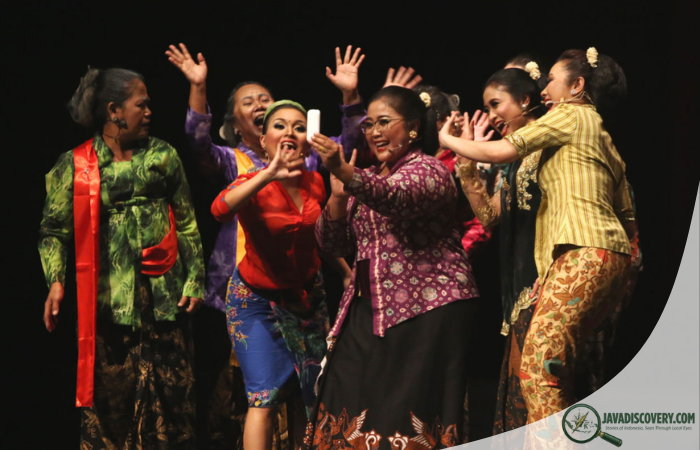
One of the most potent examples of informal education outside schools is the sanggar. These independent art studios are scattered across the island, from the urban centers of Yogyakarta to the remote volcanic slopes of East Java. Unlike a formal conservatory, a sanggar operates on the principle of magang (apprenticeship). A young child does not sit at a desk to learn the “gamelan”; they sit on the floor, surrounded by the bronze instruments, and begin by simply listening. They absorb the “roso” (feeling) of the music long before they are taught the technical notation.
In these spaces, the teacher is often a veteran artisan who treats their students as extended family. The lessons extend far beyond the art form itself. A student learning “Wayang Kulit” (shadow puppetry) is simultaneously learning Javanese philosophy, classical language, and the complex moral codes of the “Mahabharata.” This holistic approach is the hallmark of informal education outside schools. It produces individuals who are not just skilled performers, but custodians of a worldview that prioritizes balance and “unggah-ungguh” (etiquette). The sanggar serves as a sanctuary where the pressure of modern standardized testing is replaced by the slow, deliberate mastery of a craft that may take a lifetime to perfect.

The Pawon and Sawah: Classrooms of Survival and Science
If the sanggar is the school of the soul, then the “pawon” and “sawah” are the schools of survival. Informal education outside schools is most visible in the domestic and agricultural spheres of Java. In the smoke-stained kitchens of rural homes, young girls and boys learn the complex chemistry of jamu (herbal medicine) by watching their grandmothers balance the bitterness of bratawali with the sweetness of palm sugar. This is not rote memorization; it is an education in botany, health, and ancestral care passed down through sensory experience—smelling the freshness of turmeric, feeling the texture of galangal, and understanding the seasonal availability of roots.
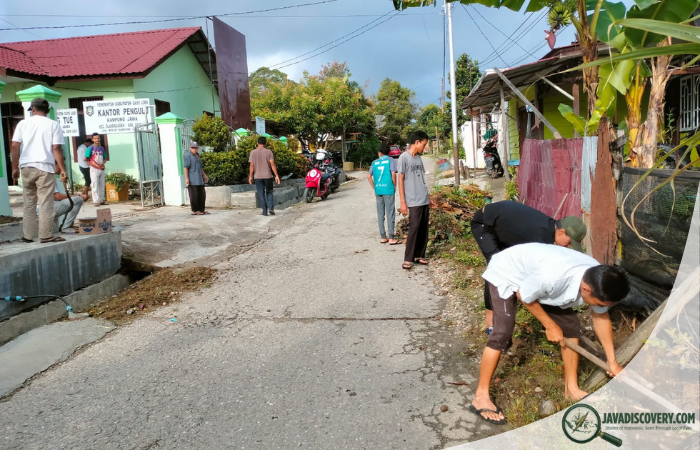
Similarly, the rice fields act as an outdoor laboratory for informal education outside schools. A Javanese farmer’s child learns the “Pranata Mangsa” (the traditional agricultural calendar) by observing the migration of birds, the flowering of specific trees, and the position of the stars. This indigenous meteorological knowledge is rarely found in school textbooks, yet it has sustained the island’s population for millennia. Learning how to manage the “subak” (irrigation) systems or identifying which insects are friends or foes to the paddy is a sophisticated environmental science taught through “gotong royong” (communal labor). This ensures that the ecological wisdom of the ancestors is not lost to the mechanization of modern farming.
“My grandfather never went to university, but he knew the language of the wind and the soil. He taught me that the earth is not something you own, but a relative you respect. That is the most important lesson I ever learned.” — Suryo, 38, an organic farmer in Boyolali.
The Role of the “Pesantren” as an Informal Hub
While often categorized as religious institutions, many “pesantren” (Islamic boarding schools) in Java serve as massive hubs for informal education outside schools. Beyond the study of scripture, these communities are centers for vocational training and character building. In the traditional “Salaf” pesantren, students often engage in “ngaji kuping” (learning by listening), where they sit in a circle around a “Kyai” (religious leader) to discuss not just theology, but ethics, conflict resolution, and community leadership.
The “santri” (students) often manage their own small economies, from fishponds to bakeries, learning the nuances of trade and cooperation through direct action. This decentralized form of learning fosters a sense of “kemandirian” (independence) and social responsibility. Informal education outside schools within the pesantren framework emphasizes that a person’s worth is measured by their “akhlak” (character) and their utility to the community, rather than their grade point average. It creates a network of social support that remains active long after the students have returned to their respective villages.
Digital Spaces: The New Frontier of Informal Learning
The landscape of informal education outside schools is rapidly evolving with the integration of digital technology. In the creative hubs of Bandung and Jakarta, a new generation of Javanese youth is bypassing traditional institutions to learn high-level skills like coding, digital illustration, and cinematography through peer-to-peer networks and online communities. These “creative collectives” function much like a modern sanggar, where knowledge is shared freely and hierarchy is based on merit rather than age.
This digital shift in informal education outside schools allows Javanese creators to compete on a global stage while remaining rooted in their local context. A young animator in a village in East Java can learn 3D modeling from a mentor in Seattle, while simultaneously using their skills to tell local Javanese folktales. This fusion of the global and the local (glocalization) is the future of informal learning on the island. It democratizes access to information, allowing those who might be marginalized by the formal school system to find their voice and their livelihood through self-directed study.
| Learning Environment | Core Knowledge Transmitted | Method of Instruction |
|---|---|---|
| The Sanggar | Arts, Philosophy, Language | Magang (Apprenticeship) |
| The Pawon (Kitchen) | Herbal Medicine, Nutrition | Direct Observation / Participation |
| The Sawah (Fields) | Ecology, Seasonality, Cooperation | Gotong Royong (Communal Labor) |
| The Pesantren | Ethics, Leadership, Trade | Ngaji Kuping / Community Living |
The Philosophical Anchor: “Ing Ngarsa Sung Tuladha”
The foundation of informal education outside schools in Java is encapsulated in the philosophy of Ki Hajar Dewantara: Ing Ngarsa Sung Tuladha, Ing Madya Mangun Karsa, Tut Wuri Handayani. While these principles influenced the formal school system, they find their purest expression in informal settings. A father working in his woodcarving shop is “in front, giving an example.” A mother teaching her daughter to weave “batik” is “in the middle, building the spirit.” The village elder watching the youth organize a local festival is “at the back, giving support.”
This decentralized mentorship is what gives Javanese society its remarkable resilience. Informal education outside schools ensures that even in times of economic or social upheaval, the core skills of the community survive. During the pandemic, when formal schools were closed, the informal networks of the village became the primary safety net. Knowledge about immune-boosting herbs, community farming, and local history saw a resurgence as families were forced back into their domestic “classrooms.” This proved that while the school building may close, the process of Javanese education never stops.
Challenges and the Risk of “Cultural Amnesia”
Despite its strength, informal education outside schools faces significant threats in a rapidly urbanizing Java. As younger generations move to the cities, the chain of oral tradition is often broken. The “sepuh” who hold the secrets of the forest or the intricacies of classical dance often find themselves without apprentices. This “cultural amnesia” is a silent crisis. When an elder passes away without sharing their knowledge, it is as if a library has burned down.
To combat this, some communities are creating “ruang publik” (public spaces) specifically designed to foster informal education outside schools. Mobile libraries (perpus keliling), community gardens, and village archives are being established to archive and revitalize ancestral wisdom. These grassroots movements recognize that to move forward, Java must look back. They are attempting to bridge the gap between the ancient “sanggar” model and the modern “maker space,” ensuring that informal learning remains a relevant and viable path for the Javanese youth.
Conclusion: The Eternal Classroom of the Heart
Informal education outside schools is the invisible thread that holds the Javanese identity together. It is a system that values the “batin” (inner self) as much as the “brain,” and “kearifan” (wisdom) as much as “kepintaran” (cleverness). In the villages and the urban kampungs, the process of becoming “manungsa sejati” (a true human) continues unabated, guided by the hands of masters and the whispers of history.
As the “adzan” echoes across the rooftops and the evening shadows lengthen on the “pendopo,” a young child somewhere in Java is sitting down to watch their father carve a piece of teak. They are not taking notes, and they will not be tested tomorrow. Yet, in that quiet moment of observation, a vital piece of Java is being transferred. Informal education outside schools is not a relic of the past; it is the living, breathing future of an island that knows its soul cannot be found in a textbook, but in the shared experience of its people. It is a journey through time, faith, and humanity that never truly reaches a graduation ceremony, for in Java, to live is to learn.