Women of Java Keepers of Culture and Agents of Change

javadiscovery.com – Before the village fully wakes, women of Java are already moving through the dim blue of early morning. The air smells of damp earth and wood smoke. In narrow kitchens, hands rinse rice, slice shallots, and light stoves that crackle softly. Outside, the sky lightens behind banana trees, and roosters announce the day in uneven bursts. These women do not hurry, yet nothing is delayed. Their movements carry memory, discipline, and purpose, shaped by generations who lived and labored the same way.
Across Java, women stand at the quiet center of daily life. They rarely claim attention, yet their presence is everywhere. In homes, fields, markets, prayer spaces, workshops, and classrooms, they hold together the rhythms that define Javanese society. To understand Java without understanding its women is to miss the forces that sustain both tradition and transformation.
Guardians of the Domestic World
In many Javanese communities, the home is not simply a private shelter. It is a site of education, moral formation, and cultural continuity. Women manage this space with authority that is often understated but rarely questioned.

The kitchen, in particular, serves as a living archive. Recipes are not written down. They are learned through observation and repetition. A daughter watches her mother judge heat by sound, texture by touch, readiness by smell. Measurements are felt, not counted.
Food carries stories. Certain dishes appear during specific ceremonies. Others are reserved for times of mourning or celebration. Through daily cooking, women transmit knowledge that binds families to ancestors and place.
Raising Values, Not Just Children
Childrearing in Javanese households is guided largely by women. Lessons are subtle. Children are taught to speak politely, to lower their voices around elders, to read emotional cues. Discipline is gentle, delivered through example rather than command.
From an early age, girls and boys learn about balance. Anger is discouraged. Patience is praised. Cooperation is expected. These values shape social behavior far beyond childhood.
Women in the Marketplace
As the sun rises, village markets fill with sound and color. Baskets of vegetables arrive balanced on motorbikes. Fish glisten on trays of ice. Spices stain fingers yellow and red.
Women dominate these spaces. They bargain, calculate, joke, and observe. Many households depend on women’s market work for financial stability. Earnings may be modest, but control over daily expenses grants women significant influence.
The market is also a place of information exchange. News travels quickly here. Women discuss prices, health concerns, family matters, and local events. In this way, the market functions as a social nerve center.
Invisible Labor, Enduring Strength
Much of women’s work in Java remains unrecognized. Managing households, caring for elders, maintaining social ties, and organizing ceremonies require time and energy rarely counted as labor.
Yet these tasks sustain community cohesion. Weddings, funerals, and religious gatherings depend heavily on women’s coordination. They plan menus, arrange offerings, prepare clothing, and ensure rituals proceed correctly.
This labor is physical, emotional, and logistical. It is demanding, and it is constant.
Strength Without Display
Javanese ideals often celebrate softness and restraint in women. Loud ambition is discouraged. Endurance is admired. Many women internalize these expectations, expressing strength through reliability rather than assertion.
To outsiders, this can resemble submission. From within, it is understood as resilience.
Women and Spiritual Life
Spiritual practice in Java is deeply woven into everyday routines, and women play a central role. They prepare offerings, clean prayer spaces, and teach children how to observe religious customs.
In both formal religious settings and local spiritual traditions, women act as transmitters of belief. They remember ritual sequences, sacred days, and ancestral obligations.
In some communities, women are also healers and advisors, consulted for matters involving health, relationships, and emotional distress.
Education and Shifting Horizons
Over recent decades, access to education for Javanese women has expanded significantly. Girls attend school in large numbers, and many pursue higher education.
This shift has altered expectations. Educated women navigate multiple worlds, balancing traditional roles with professional ambitions. Teachers, nurses, entrepreneurs, and administrators now return home to villages that still expect their presence in domestic life.
Negotiation becomes part of daily existence.
Change Without Rejection
Most Javanese women do not frame change as rebellion against tradition. Instead, they adapt it. Old values are reinterpreted. Respect remains important, but obedience becomes more selective.
Women choose which customs to preserve and which to adjust, often quietly.
Urban Women, Rural Roots
In cities like Yogyakarta, Solo, and Surabaya, women navigate faster rhythms. Traffic hums. Offices replace fields. Cafes and classrooms reshape social interaction.
Yet rural roots remain influential. Many urban women return to their villages regularly, maintaining ties to family and land. They bring new ideas with them, influencing village life in subtle ways.
Change moves both directions.
Artisans, Workers, and Cultural Bearers
In batik workshops, women sit cross legged over white cloth, drawing wax patterns with steady hands. Each motif carries meaning, tied to region, status, or philosophy.
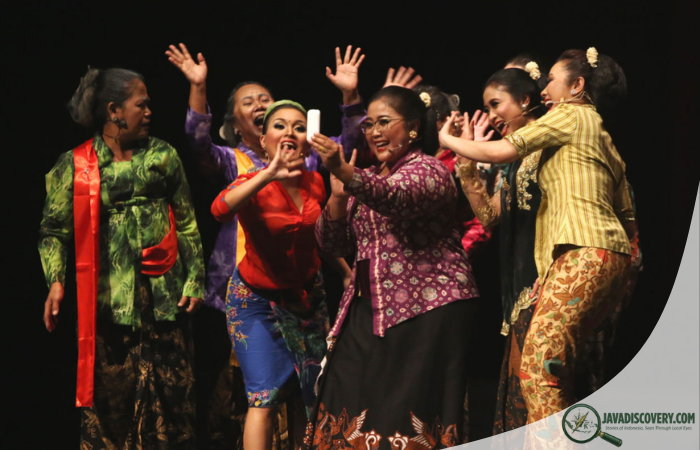
In dance studios, women train bodies to express stories passed down for centuries. Movements are precise, controlled, and symbolic.
These arts survive largely because of women’s dedication. They teach, perform, and adapt traditions to contemporary audiences without erasing their essence.
Questioning Roles, Expanding Voices
Today, conversations about gender roles are more open. Younger women question expectations placed on them. They speak about workload imbalance, marriage pressure, and economic independence.
These discussions do not always happen publicly. They unfold in small groups, online spaces, and private conversations.
Change is gradual, but it is real.
Between Patience and Assertion
Javanese women often walk a narrow path. Too much assertion risks social disapproval. Too much patience risks invisibility.
Many respond by choosing strategic moments to speak and act. Their influence grows not through confrontation, but through persistence.
What the World Often Misses
Global narratives often reduce women to symbols of oppression or empowerment. Javanese women do not fit neatly into either category.
They carry contradictions. They maintain traditions while reshaping them. They accept certain limits while pushing others.
Their power lies in continuity.
Keepers and Shapers
To call Javanese women keepers of culture is accurate, but incomplete. They are also agents of change.
Culture does not survive unchanged. It survives because it is tended, adjusted, and renewed.
Through daily decisions, women determine which practices endure and which fade.
A Future Woven From the Past
As evening falls, women gather once more in kitchens and courtyards. Children finish homework. Meals are shared. Stories are exchanged.
Tomorrow will bring similar routines, yet nothing is exactly the same.
In these repeating cycles, Javanese women continue their work. Quiet, skilled, and resilient, they hold together the past while shaping the future.