Crafting Survival, How Javanese Artisans Keep Ancestral Skills Alive

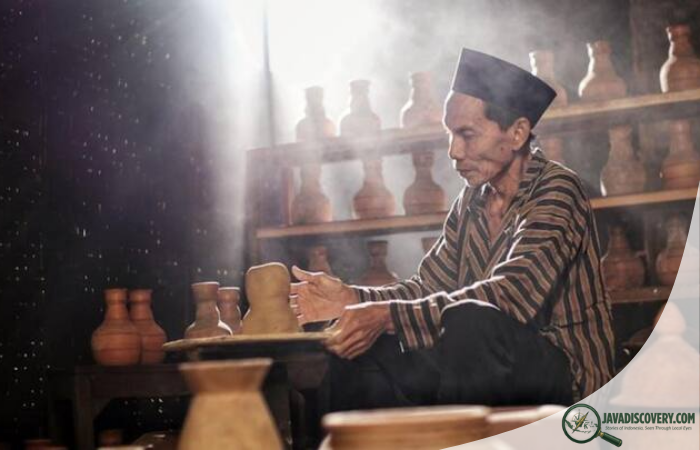
javadiscovery.com – The workshop smells of wood dust and damp earth. Morning light slips through uneven wooden slats, catching on floating particles that shimmer briefly before settling again. An old man sits cross legged on the floor, his hands steady despite their age. Each movement follows a rhythm learned long before memory formed words. Outside, motorcycles pass, engines humming like distant insects. Inside, time moves differently.
Hands That Remember What Books Cannot
Across Java, traditional artisans work in spaces that rarely appear on maps. Small courtyards behind family homes. Narrow rooms with low ceilings blackened by decades of smoke. Temporary shelters near rice fields where tools are stored beside farming equipment.
These are places where knowledge is carried in muscle memory rather than manuals. Techniques pass from parent to child through repetition, correction, and silence. A wrong cut is fixed quietly. A good one earns a nod.

“You do not explain everything,” says Pak Sumarno, a woodcarver from Jepara. “The hands learn faster than the mouth.”
His fingers trace patterns inherited from generations before him. Floral curves, mythic creatures, subtle asymmetries that distinguish handmade work from machine precision. Each piece carries invisible lineage.
Craft as Livelihood and Identity
For many artisans, craft is not a hobby or heritage project. It is survival. Income from carving, weaving, pottery, or metalwork supports entire households. When orders slow, families feel it immediately.
In villages known for batik, looms clatter softly from early morning until late afternoon. Wax melts over charcoal stoves. Fabric dries on bamboo poles under unpredictable skies. Weather determines productivity.
“If it rains too long, we cannot work,” explains Ibu Kartini, a batik maker in Central Java. “Cloth must dry properly or the colors fail.”
The vulnerability of craft livelihoods contrasts sharply with the speed of mass production. Factory goods arrive cheaper and faster. Yet many buyers still seek the irregularity of human hands.
Pressure from Modern Economics
Economic change has reshaped craft communities. Younger generations face difficult choices. Traditional skills require years of apprenticeship but offer uncertain returns. Other jobs promise faster income.
Some families encourage children to learn crafts only as a backup. Others insist tradition continues regardless of profit.
“My son wants to work in the city,” says Pak Slamet, a bamboo craftsman from East Java. “I understand. But I still teach him at night.”
This quiet persistence defines many artisan households. Skills are taught even when futures remain unclear.
Women at the Center of Craft Survival
In many craft traditions, women play central roles. Weaving, batik, food related crafts, and textile production often depend on female labor.
Workspaces double as domestic areas. Children play nearby while mothers work. Songs, gossip, and storytelling accompany repetitive motions.
“Craft fits around life,” says Ibu Sri, adjusting threads on a backstrap loom. “We work between cooking, cleaning, caring.”
This flexibility keeps traditions alive but also hides labor intensity. Craftwork is physically demanding. Fingers ache. Eyes strain. Yet work continues.
Learning Without Classrooms
Artisan education rarely happens formally. There are no certificates. Progress is measured by feel.
Young learners start with simple tasks. Preparing materials. Cleaning tools. Observing silently. Over time, complexity increases.
Mistakes are part of instruction. Scolding is rare. Correction is physical. A hand guiding another hand.
“You learn patience first,” says Pak Widodo, a metalworker. “Skill comes later.”
Markets That Shape Meaning
Crafts exist within markets that influence design and value. Certain motifs sell better. Others fade.
Artisans negotiate between tradition and demand. Some adapt patterns subtly. Others refuse change.
“If I change too much, it is no longer ours,” says a mask maker in Malang.
This balance determines whether a craft survives or stagnates. Adaptation does not always mean loss. Sometimes it ensures continuity.
Ritual Objects and Sacred Skill
Some crafts remain tied to ritual. Wayang puppets, ceremonial cloths, sacred tools. These objects require spiritual discipline as well as technical skill.
Artisans may fast or pray before beginning work. Certain materials are treated with respect.
“This is not just work,” explains a puppet maker from Surakarta. “It carries responsibility.”
Such crafts resist commercialization. Their value lies beyond price.
Youth Between Inheritance and Opportunity
Young artisans navigate conflicting worlds. Social media exposes them to broader audiences. Some use it to share work. Others leave entirely.
Those who stay often blend old techniques with new presentation. Photography, storytelling, documentation.
“If people understand the process, they value it more,” says a young ceramic artist.
This shift does not replace tradition. It reframes it.
Time Measured in Process
Craft resists speed. Wood must dry. Wax must cool. Clay must rest.
In a culture driven by deadlines, these rhythms feel slow. Yet they define quality.
Artisans measure time differently. Progress is visible, tactile.
Each finished piece marks survival. Another day worked. Another skill passed on.
Quiet Persistence Across Generations
Java’s craft traditions persist not through grand gestures but daily repetition. Hands working. Eyes watching. Knowledge moving silently forward.
Workshops remain humble. Tools age. Skills endure.
In a rapidly changing island, artisans hold continuity not by resisting change, but by anchoring it.
The future of these crafts remains uncertain. What is certain is the resilience embedded in every carved line, woven thread, and molded form.
Category: People
Writer: Nizam Hamidan
SEO and Editorial Metadata
A. SEO Title
Crafting Survival How Javanese Artisans Keep Ancestral Skills Alive
B. Meta Description
C. Meta Keywords
D. Excerpt
F. Focus Keyword
Javanese artisans ancestral skills