Street Murals in Surabaya Speak for the City

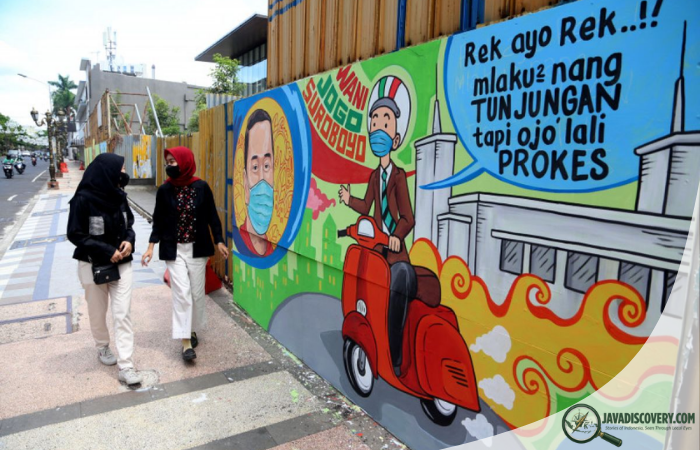
javadiscovery.com – At dawn in Surabaya, when the heat has not yet risen from the asphalt and the call to prayer lingers in the humid air, the city’s walls begin to reveal themselves. Along narrow kampung alleys and beneath concrete flyovers, color blooms against grey surfaces. Faces stare out from crumbling plaster. Words march across brick in sharp, urgent strokes. Before traffic swallows the streets and vendors set up their carts, Surabaya speaks quietly through paint.
The City of Heroes and the Language of Walls
Surabaya carries a reputation that runs deep in Indonesia’s national memory. Known as Kota Pahlawan, the City of Heroes, it was the stage of fierce resistance in November 1945 when Indonesian fighters defended their newly declared independence. The memory of that battle is etched into monuments and textbooks, but it is also alive in murals that rise and fade across the city.
In districts not far from the Heroes Monument, portraits of national figures appear with renewed urgency. The face of :contentReference[oaicite:0]{index=0}, mouth open mid speech, is often painted with bold red and white strokes. His image does not feel distant or ceremonial. It feels immediate, almost conversational. Underneath, handwritten slogans question corruption, inequality, or the rising cost of living. The message is clear. The struggle for justice did not end in 1945.

Street murals in Surabaya are not random decorations. They are acts of remembrance and reminders of unfinished promises. In a city shaped by defiance, walls become a continuation of civic dialogue.
Urban Growth and the Pulse of Dissent
Surabaya has transformed rapidly in the last two decades. Elevated roads stretch across once open skies. Shopping centers rise where small workshops once stood. Port activity hums day and night. Development brings pride and opportunity, but it also brings tension.
Under bridges near the industrial zones, murals depict masked figures holding placards that read, “Untuk Siapa Kota Ini?” For whom is this city? The question lingers in thick black letters. Nearby, a painted child sits beside a cracked earth landscape, referencing urban flooding and environmental degradation. The imagery is direct, sometimes raw.
In neighborhoods where eviction notices have reshaped communities, artists respond swiftly. A series of murals once appeared along a disputed riverbank settlement, portraying houses as fragile boats drifting in uncertain waters. The paintings were gone within weeks, replaced by uniform grey. Residents remember them vividly. “It was like someone finally painted what we felt,” said Arif, a motorcycle mechanic who had lived in the area for fifteen years. “Even if it disappeared, we saw it.”
Youth Voices and Campus Influence
Surabaya’s identity is also shaped by its students. Institutions such as :contentReference[oaicite:1]{index=1} nurture engineers, architects, and designers who move easily between technical precision and creative expression. Many of them channel their observations into street art.
In the evenings, clusters of young painters gather with spray cans and sketchbooks near railway tracks or abandoned warehouses. They talk about algorithms and architecture by day, and social satire by night. One mural near a campus gate shows a human head filled with tangled cables, captioned “Terlalu Terkoneksi.” Too connected. It critiques digital overload in a city racing toward smart technology branding.
The style varies from intricate stencil work to broad expressive strokes. Some murals borrow from global graffiti aesthetics, yet they remain grounded in local context. Javanese phrases appear alongside Indonesian slang. Humor softens critique, but the underlying commentary is sharp.
Humor as a Shield and a Sword
In Surabaya, humor often carries serious weight. The arek character, a term locals use to describe their bold and straightforward identity, thrives on wit. Street murals reflect this spirit.
Near a crowded traditional market, a caricature of a politician with an oversized suit and tiny legs stands atop a mountain of rice sacks. The caption reads, “Janji Setinggi Harga.” Promises as high as prices. Vendors chuckle as they pass. “It makes us laugh, but it’s true,” said Sulastri, who sells spices nearby. “At least someone dares to say it.”
Animals frequently appear as stand ins for human behavior. A mural of a fox wearing a batik shirt counts stacks of coins while a group of chickens watches anxiously. The metaphor is unmistakable. Through humor, artists create safe entry points into sensitive conversations.
Religious Imagery and Moral Reflection
Surabaya’s spiritual life is woven into its public spaces. Mosques anchor neighborhoods, and religious study groups meet in modest homes. Murals sometimes echo moral teachings rather than political demands.
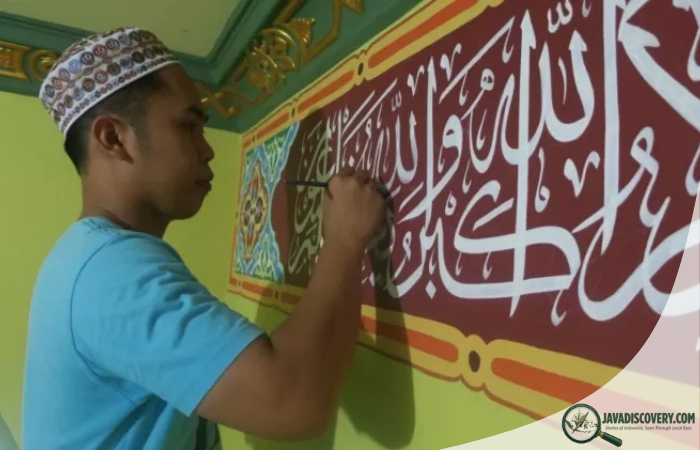
In one kampung alley, a large painting depicts hands releasing white doves into a sky painted with Quranic calligraphy. The words emphasize honesty and compassion. Beneath them, a line reads, “Jujur Adalah Berani.” Honesty is bravery. The mural was painted collectively by residents before Ramadan. Children dipped brushes into buckets of blue and green paint while elders guided the composition.
Such murals blur the line between protest and prayer. They call for accountability not only from leaders but from neighbors and oneself. Social commentary in Surabaya is often inseparable from spiritual introspection.
Spaces of Legality and Negotiation
Not all murals exist in defiance. Some are part of community initiatives aimed at beautifying public areas. In parks such as :contentReference[oaicite:2]{index=2}, organized art events invite artists to transform designated walls. The works created there often highlight environmental awareness or cultural heritage.
Meanwhile, heritage neighborhoods like :contentReference[oaicite:3]{index=3} integrate murals into storytelling about the past. Painted scenes depict traditional games, old trams, and bustling port life from decades ago. Tourists wander through the alleys photographing these nostalgic images, yet beneath the charm lies a subtle message about preserving memory amid modernization.
The existence of sanctioned spaces reveals negotiation between artists and authorities. Some creators accept these boundaries, viewing them as opportunities for visibility. Others insist that the true spirit of street art lives in spontaneity. The tension itself becomes part of the narrative.
Erasure and the Politics of Grey Paint
In Surabaya, the lifespan of a mural can be uncertain. Rain peels paint from concrete. Construction projects swallow entire walls. Authorities sometimes remove pieces deemed too provocative. Erasure is both literal and symbolic.
When a mural criticizing environmental policies was abruptly painted over near a government office, photographs circulated online before the image vanished. The grey rectangle left behind felt louder than the original artwork. “They can cover it, but they cannot erase the thought,” remarked Dimas, a local graphic designer who documented the piece.
The cycle of creation and removal gives Surabaya’s mural culture a sense of urgency. Artists know their work may be temporary. That impermanence adds intensity to each stroke.
Environmental Anxiety on Concrete Surfaces
As coastal neighborhoods face tidal flooding and air quality fluctuates, environmental themes appear more frequently. Along a canal lined with plastic debris, a mural portrays a giant fish skeleton intertwined with factory chimneys. The sky above it is painted an unnatural purple.
Residents say the mural emerged after severe flooding inundated nearby homes. “We were tired of complaining without being heard,” said Rahma, a teacher who lives close to the canal. “The painting says what meetings could not.”
These images do not rely on abstract symbolism. They are rooted in lived experience. Floodwater stains still mark house walls beneath the artwork.
Football, Identity, and Collective Emotion
Surabaya’s devotion to football also finds expression in street art. Supporters of the local club paint large emblems and roaring mascots across neighborhood walls. Victories are celebrated with fresh layers of color. Defeats sometimes inspire reflective messages about loyalty and perseverance.
While these murals may appear separate from political commentary, they reveal another dimension of civic identity. Football in Surabaya is more than sport. It is belonging, pride, and a shared emotional language.
Women Artists Claiming Space
In recent years, more female artists have emerged within Surabaya’s street art community. Their works often explore gender expectations and everyday resilience. One mural near a busy intersection portrays a woman balancing a stack of books, a child, and a market basket. The caption reads, “Peran Tanpa Henti.” Roles without end.
Passersby pause to interpret the layers. The painting acknowledges invisible labor and the quiet strength of women who sustain households and communities. By occupying public walls, these artists challenge assumptions about who has the right to speak in urban space.
A Living Archive of Public Sentiment
To walk through Surabaya is to move through a shifting gallery of opinion. Each mural captures a moment in the city’s emotional timeline. Together they form an unofficial archive of public sentiment.
The archive is fragmented and fragile. Some pieces fade quickly. Others endure through repeated retouching by devoted artists. Yet the collective impression remains powerful. Surabaya’s walls are not silent backdrops. They are participants in civic life.
At sunset, when the sky turns copper above the port and the scent of fried tofu drifts through alleys, murals glow softly in the fading light. Children chase each other past painted slogans. Motorcycles hum by. Life continues around the images, absorbing and reshaping their meaning.
In the end, street murals in Surabaya are not simply art forms. They are conversations layered onto concrete. They question authority, celebrate identity, mourn losses, and imagine futures. They remind residents that the city belongs to those who inhabit it, not only those who govern it.
As long as Surabaya continues to change, its walls will continue to respond. Paint will dry, peel, and return in new colors. And in that ongoing cycle, the city will keep speaking through its streets.
Category: Art
Writer: Maya Kartika
A. SEO Title
B. Meta Description
C. Meta Keywords
D. Excerpt
F. Focus Keyword
Surabaya street murals