The Hidden Life Inside Javanese Rice Field Ecosystems

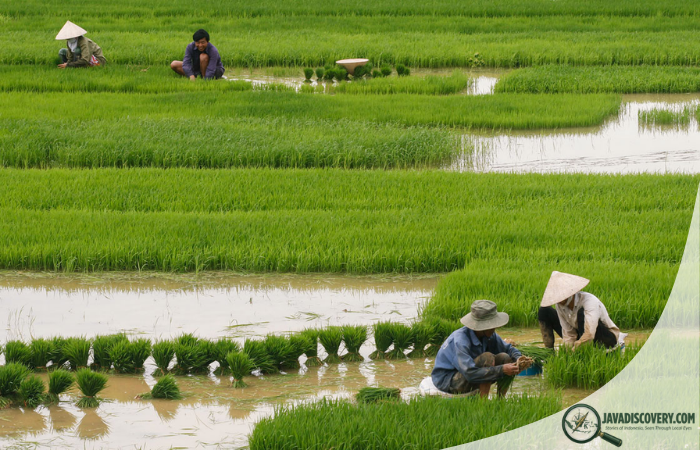
javadiscovery.com – At first light, when mist still lingers low above the paddies, the rice fields of Java appear almost motionless. Water mirrors the sky in quiet sheets, and young rice plants stand in precise rows, their green blades catching the pale glow of dawn. It is a landscape often described in terms of simplicity and calm. Yet beneath that calm surface, an entire world moves unseen.
Kneel at the edge of a paddy, and the illusion begins to dissolve. The water trembles with life. Insects skate across its surface, small fish flicker in the shadows, and the mud below shifts with hidden activity. The rice field is not just a place where crops grow. It is an ecosystem, dense with interaction, where water, soil, plants, and animals exist in constant negotiation.
For generations, Javanese farmers have worked within this system, shaping it while also depending on its balance. To understand the rice field is to see it not as a single layer of green, but as a living network.

Water as a Living Medium
Water defines the rice field, but it does not simply sit in place. It moves, slowly and continuously, guided through irrigation channels that connect one field to another.
This movement carries nutrients, sediments, and microscopic organisms. It links separate paddies into a larger system, where what happens upstream can influence conditions downstream.
The water also creates a boundary between environments. Above it lies the visible world of plants and air. Below it, within the mud, exists a submerged layer where different forms of life thrive.
This duality makes the rice field both terrestrial and aquatic at once.
The World Beneath the Surface
Below the waterline, the soil is soft and saturated. It holds organic matter, decomposing plant material, and a range of microorganisms that play essential roles in nutrient cycling.
Bacteria and fungi break down organic material, releasing nutrients that rice plants absorb through their roots. This process sustains growth without the need for constant external input.
Small invertebrates move through this layer, feeding on organic matter and contributing to soil structure. Their activity keeps the mud aerated and dynamic.
Though invisible to the casual observer, this underground world is fundamental to the health of the field.
Insects and Surface Life
At the surface, insects are among the most visible inhabitants. Water striders glide effortlessly across the thin film, while dragonflies hover above, their wings catching light as they hunt.
Some insects feed on the rice plants, drawing nutrients from leaves and stems. Others act as predators, controlling populations and maintaining balance.
This interaction forms a delicate system of checks and responses. When one group increases, another may follow, creating a dynamic equilibrium.
Farmers observe these patterns closely, understanding that not all insects are harmful.
Amphibians and Silent Predators
Frogs are common residents of Javanese rice fields, especially during the wet season. Their presence is often heard before it is seen, with calls echoing across the paddies at dusk.
They play a crucial role as predators, feeding on insects that might otherwise damage crops.
Their life cycle is closely tied to the water. Eggs are laid in shallow pools, and tadpoles develop within the flooded fields.
As amphibians, frogs connect aquatic and terrestrial environments, moving between water and land as conditions change.
Birds and the Sky Above
Above the fields, birds form another layer of the ecosystem. Some feed on insects, while others search for small fish or amphibians.
Their movement across the landscape connects different habitats, linking rice fields with forests, rivers, and open land.
Birds also act as indicators of environmental health. A diverse and active bird population often reflects a balanced ecosystem.
Their presence adds a vertical dimension to the field, extending its ecological reach into the sky.
Rice Plants as Habitat
The rice plants themselves are more than crops. They provide structure within the ecosystem, creating spaces for organisms to live and interact.
Their roots anchor into the soil, stabilizing the substrate and facilitating nutrient exchange. Their stems rise above the water, offering surfaces for insects to rest and feed.
As the plants grow, they change the environment, altering light levels, water temperature, and habitat complexity.
This transformation influences which species are present at different stages of the growing cycle.
Cycles of Growth and Renewal
Rice fields are not static environments. They change over time, following the cycle of planting, growth, harvest, and rest.
Each stage brings different conditions. Newly flooded fields attract certain species, while mature crops support others.
After harvest, when fields may be left fallow, different organisms emerge, feeding on remaining plant material and preparing the soil for the next cycle.
This constant change creates a rhythm that shapes the ecosystem.
Human Interaction and Balance
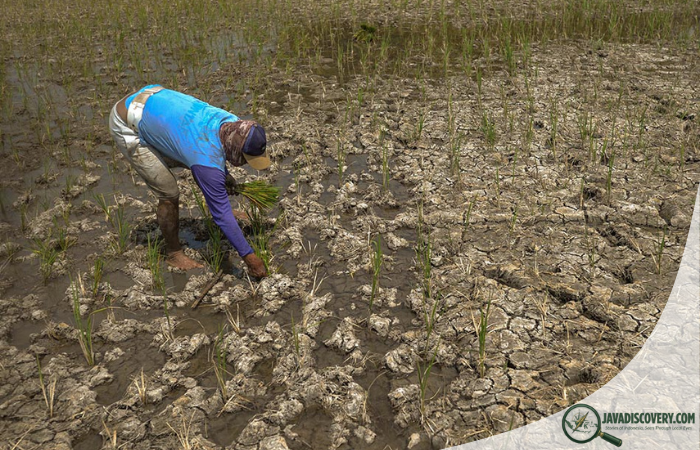
Farmers are active participants in this ecosystem. Their actions influence water levels, plant growth, and species composition.
Traditional practices often aim to maintain balance rather than eliminate all competing organisms.
By observing natural patterns, farmers adjust their methods, allowing beneficial relationships to continue.
This approach reflects an understanding that productivity depends on ecological health.
Threats to the Ecosystem
Modern agricultural practices can disrupt this balance. The use of chemical inputs may reduce biodiversity, affecting both harmful and beneficial organisms.
Changes in water management, land use, and climate patterns also influence the stability of the ecosystem.
When diversity declines, the system becomes more vulnerable to imbalance.
This highlights the importance of maintaining ecological complexity within rice fields.
A Network of Interdependence
Every element within the rice field is connected. Water carries nutrients, soil supports plants, insects interact with crops, and larger animals depend on smaller ones.
This network of relationships creates resilience. When one part changes, others respond, adjusting to maintain overall function.
Understanding these connections is key to sustaining the system.
Seeing Beyond the Surface
To walk past a rice field without looking closely is to miss much of what it contains. The visible rows of plants are only one layer of a complex environment.
By paying attention to movement, sound, and subtle changes, the hidden life becomes more apparent.
This awareness transforms perception, revealing depth where there once seemed simplicity.
A Living Landscape
As the sun rises higher and the day unfolds, the rice field continues its quiet activity. Ripples form, insects move, and plants grow steadily toward harvest.
Nothing appears dramatic, yet everything is in motion.
In Java, these fields represent more than agricultural spaces. They are living landscapes, shaped by the interaction of natural forces and human care.
Within them, the hidden life of the ecosystem continues, sustaining both the land and those who depend on it.