Women Batik Entrepreneurs Transforming Rural Java

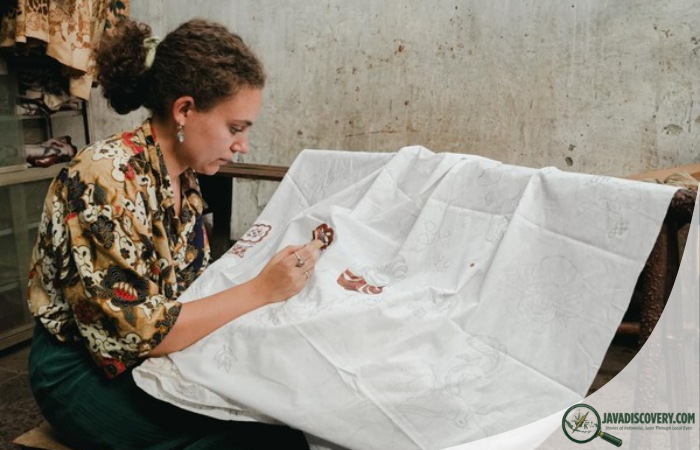
javadiscovery.com – The morning air in a small Javanese village carries the scent of melted wax. Beneath the shade of bamboo roofs and mango trees, women sit cross-legged on low stools, holding slender copper tools known as canting. With steady hands, they draw delicate lines of hot wax across white cotton cloth. The patterns emerge slowly, like stories unfolding thread by thread.
In many rural corners of Java, batik is more than a textile. It is a living tradition, an inheritance passed through generations of women who learned the craft from mothers, grandmothers, and neighbors. Today, these same women are not only artisans but also entrepreneurs. Through patience, creativity, and determination, they are transforming small villages into centers of cultural production while sustaining local economies.
The rise of women batik entrepreneurs in rural Java reflects a quiet but powerful shift. What was once a domestic craft practiced in household courtyards has grown into a livelihood that connects villages to national and international markets.

Yet the heart of the work remains deeply personal. Each piece of cloth carries the mark of a human hand and the memory of a place.
The Roots of Batik in Village Life
Batik has been part of Javanese culture for centuries. Historically, the craft flourished in royal courts where intricate patterns symbolized social status and philosophical ideas. Over time, these traditions spread outward into villages, where women adapted motifs and techniques into everyday life.
In rural areas, batik production often took place within family compounds. Women worked between household responsibilities, applying wax to cloth while watching children or chatting with neighbors.
Village batik styles gradually developed their own identities. Coastal regions favored brighter colors and influences from trade cultures, while inland areas often retained earthy tones and classical motifs.
Today, these local traditions remain visible in villages such as :contentReference[oaicite:0]{index=0}, :contentReference[oaicite:1]{index=1}, and :contentReference[oaicite:2]{index=2}.
In these communities, the craft continues to evolve through the creativity of women who transform tradition into economic opportunity.
From Household Skill to Business
For many women in rural Java, the journey into entrepreneurship begins with skills learned during childhood.
Ibu Rini, a batik maker in a village outside Pekalongan, recalls watching her grandmother prepare wax over a small charcoal stove. “I was maybe seven years old,” she says with a smile. “At first they only allowed me to trace simple lines. Later I began drawing my own flowers.”
Years later, after raising children and managing household responsibilities, Rini decided to turn her knowledge into a small business. She began producing batik cloth in larger quantities and selling pieces through local markets.
What started with a few orders from neighbors gradually expanded. Today, her home doubles as a modest workshop where several women work together, sharing tasks that range from waxing to dyeing and finishing.
This model of collaborative production is common across rural batik communities. Instead of centralized factories, small networks of women operate from their homes, balancing economic activity with family life.
The Art Behind Each Pattern
Creating batik by hand remains a time-intensive process that requires patience and precision.
The first step involves drawing patterns onto plain cotton or silk fabric. Using a canting filled with hot wax, artisans trace delicate lines that will resist dye during coloring. This technique allows intricate designs to emerge layer by layer.
After waxing, the cloth is immersed in dye. Once dry, additional wax is applied to preserve certain areas before the fabric enters another dye bath. The process repeats several times, depending on the complexity of the design.
Finally, the cloth is boiled to remove the wax, revealing the finished pattern.
Some pieces require weeks to complete. Highly detailed batik tulis, or hand-drawn batik, can take months.
For rural entrepreneurs, maintaining quality while meeting demand is a constant challenge. Yet many women insist that the integrity of the craft must come first.
“Batik is slow,” says Rini. “If you rush, the lines will show it.”
Patterns of Meaning
Batik motifs carry symbolic meanings that reflect layers of Javanese philosophy.
Traditional patterns often incorporate elements of nature such as flowers, birds, or flowing water. Others feature geometric shapes inspired by ancient royal designs.
The parang motif, for example, symbolizes strength and continuity. The kawung pattern represents harmony and balance.
Women artisans in rural areas frequently reinterpret these classical motifs while adding local elements. Rice plants, village landscapes, and coastal waves appear in modern designs.
Through this creative adaptation, rural batik entrepreneurs maintain cultural continuity while allowing traditions to evolve.
Economic Lifelines for Villages
In many rural communities, batik production has become a crucial source of income.
A single workshop may support several families, providing wages for waxing, dyeing, and finishing tasks. Women who once depended solely on agricultural labor now have alternative livelihoods that can be performed close to home.
This economic flexibility is particularly valuable in villages where farming incomes fluctuate with seasonal conditions.
Local markets and cultural festivals often provide opportunities to sell batik directly to buyers. Some artisans also collaborate with urban designers who seek authentic handmade textiles.
These connections help bridge the gap between rural craftsmanship and broader creative industries.
Balancing Tradition and Modern Demand
As demand for batik grows, rural entrepreneurs face new challenges.
Mass-produced printed batik fabrics have flooded markets with cheaper alternatives. While these products imitate traditional patterns, they lack the depth and craftsmanship of handmade pieces.
For village artisans, distinguishing authentic batik tulis from factory prints requires education and storytelling.
Many women emphasize the narrative behind each cloth. They explain the process, the symbolism of motifs, and the time invested in every design.
By sharing these stories, artisans invite buyers to appreciate the cultural value embedded in handmade batik.
Community Networks of Women
One of the most remarkable aspects of rural batik entrepreneurship is the strong network of women supporting one another.
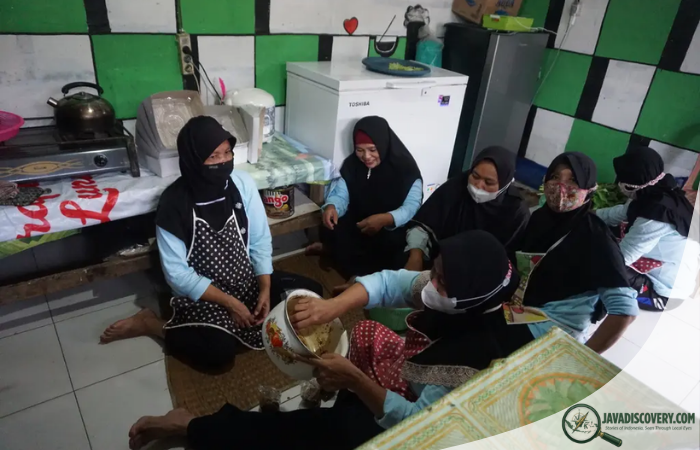
In villages across Java, batik groups function not only as production units but also as social communities. Members gather regularly to share techniques, discuss pricing, and solve practical challenges.
These gatherings often take place in open courtyards or community halls. Between work sessions, women exchange news about family life, harvest seasons, and village events.
Through these networks, knowledge flows freely. Younger artisans learn complex techniques from elders, ensuring that traditional skills continue across generations.
The Quiet Power of Craft
Beyond economics, batik entrepreneurship has become a source of personal empowerment for many rural women.
Managing a small business requires negotiation skills, financial planning, and creative decision making. These responsibilities allow women to take on leadership roles within their communities.
Some women organize training workshops for younger artisans. Others coordinate cooperative groups that manage shared resources such as dye supplies or marketing efforts.
The result is a quiet transformation within village life.
Women who once practiced batik as a household craft now shape the cultural and economic future of their communities.
A Living Heritage
As afternoon light softens across the village, the batik workshop gradually grows quiet. Completed fabrics hang from bamboo poles, their colors deepening as they dry in the warm air.
Children wander through the courtyard, curious about the patterns fluttering above them.
For the women who created these textiles, the work represents more than business. Each piece connects past and present, linking ancestral knowledge with contemporary creativity.
The survival of batik in rural Java depends not only on markets or technology but on the dedication of artisans who continue drawing patterns by hand.
In villages scattered across the island, women entrepreneurs sustain this tradition day by day. Their workshops remain places where culture, craftsmanship, and community converge.
And within the delicate lines of wax and dye, the story of rural Java continues to unfold.